They most certainly have shown the way that could set a precedent. It is a victory for the human race, believing in nature and sustainable development. It has set an example for our global fight to save the environment.
Any other country with so much oil beneath its land would have followed the course other countries took to improve its economy, totally neglecting a comparatively small but locally invaluable dent in climate and environment conservation. But not Ecuador!
The people of Ecuador have denied drilling for oil to the state in a historic referendum where the Supreme Court played a supreme role. The crude oil in Ecuador’s Yasuni National Park.
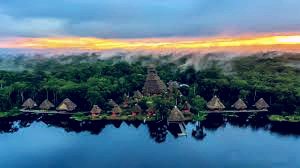
Beneath the Yasuni’s rich biosphere is estimated to 846 million barrels. It is in the Ishpingo- Tambococha- Tiputini ITT block, also known as Block 43. The oil quantity is about 20 percent of Ecuador’s reserves, providing a lucrative resource for the country’s economy.
The huge awareness shown by local people and their selfless love for the environment clearly a lesson for energy hungry development, thurst without any consideration to its impact on the holistic life. And, even more significant is the democratic way through which it is achieved.The mantle now rests with the rich/ developed nations which conveniently forgotten their payment promises to developing nations and also didn’t compensate for the loss to Ecuador. These are the countries to which more than half of the world look at, dazzled by their astonishing development and blindly emulating, regardless of the consequences impacting the fate of the planet we live on.
Energy sources and sale are concentrated in a few giant international business conglomerates, international blocks of several countries, and some countries active in unethical exploitation, manipulation, and control of the powerful governments, autocrats, leaders and ignorant third world. Some are even engaged in propaganda that there is hardly any relation in climate warming and climate catastrophe that we are facing. Dependency on fossil fuels and vested interests in it has obstructed and deliberately hampered the speed of science to invent the parallel sources. Though we are looking at an energy source transition to various other mediums ( Renewable, Electric, etc), remember these alternatives started to appear only after the callous exhaustion of prior sources. Was the collective consciousness of humankind being dormant? Or, systematically discouraged by a few powerful resourceful selfish minds?
Ecuador’s population is 18, 342, 507 ( 2022.). It is a middle-income country. The GDP per capita is 10,300 USD. The economy is based on the export of oil, bananas, shrimp, gold, and other primary agriculture products. It is the eighth largest economy in Latin America and 69th in the world by total GDP. Its GDP growth rate is 4.2% -2021, and its currency is United States Dollar.
The land of Ecuador was part of the famous Inca Empire that was conquered by the Spanish in 1532. Ecuador was liberated from Spanish colonial rule by Simon Bolivar in 1822. Spanish is its official language, and 13 other native languages, including Quechua and Shuar, are also recognized.
The equator runs through Ecuador. Its diverse landscape encompasses Amazon jungle, Andean highlands, and the wildlife -rich Galapagos Islands.
The Ecuadorians voted against the drilling in the Yasuni National Park area, which is home to indigenous tribes and with tremendous biodiversity.
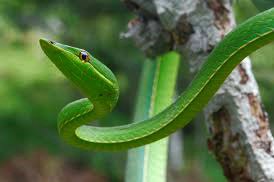
It is one of the richest areas on the planet for diversity of bird, tree, mammal, amphibian and bat species.
It is also important for the threatened golden-mantled tamarin (The golden-mantled tamarin is a tamarin species from South America. It is found in Ecuador and Peru, specifically in the upper Amazon, east of the Andes in Ecuador and Northeast Peru) and giant armadillo ( It lives in South America and feed on ants, worms etc. this species is considered vulnerable to extinction.), and is also among the most important sites in Ecuador for jaguars.
It is declared an untouchable zone to protect indigenous people and wildlife from environmental and cultural exploitation. Over 4000 plant species and 173 mammals are residing there. And it is home to two still uncontacted indigenous tribes of the Tagaeri (They live a hunting and foraging lifestyle and have resisted outside contact, making them one of the so-called uncontacted peoples of the world.They were among the Huaroami families who separated off in 1968 after refusing missionary settlement and have since lived in voluntary isolation.) and the Taromenane ( Taromenane means ‘people of the road’. Their strength may be just between 150 – 300). Also, it is an ancestral land of Huaorani indigenous people. Researchers estimate that there are as many as 100 different species of tree per acre in Yasuni.
The huge area of 9820 square kilometers in Amazonian Ecuador is situated in between the Napo and Curaray rivers and is already declared a world biosphere reserve by UNESCO. Ecuador has the honor to be the first constitution in the world to recognize legally enforceable rights of nature or ecosystem rights.
There is an interesting history to the current referendum. It goes back to year 2007, when then President Rafael Correa declared that the government would refrain from the exploration and extraction of oil in the Yasuni National Park area only if at least 50 percent of the amount compensated by rich nations. The amount required was 3.6 billion dollars of the projected revenue. The story afterward was no different. Rich nations hardly paid the amount. So, in 2013 president Correa again decided to go ahead with the exploration, which was opposed by environmentalists and the indigenous tribes backing groups. They started a movement – Yasunidos movement – and initiated a signature campaign supporting the movement and for a referendum on the subject. After many highs and lows, the Supreme Court ruled favoring referendum and ordered it to be held along with the presidential elections.
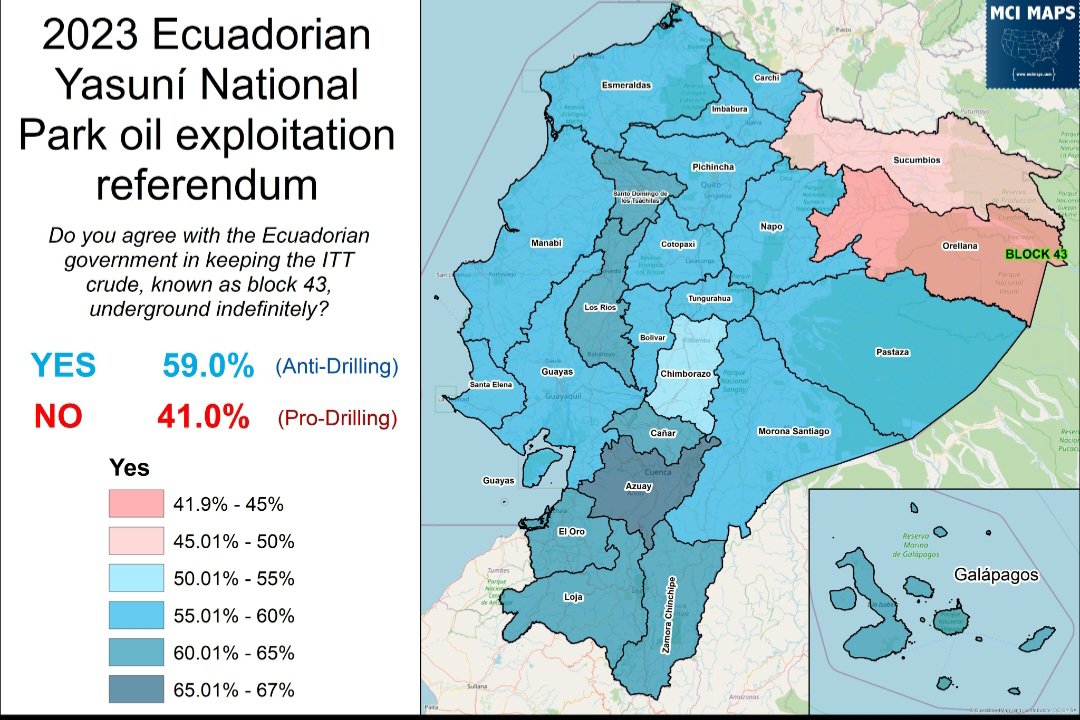
The order presented a setback to President Lasso, who was not ready to part with the oil income helping the economy. It’s an oil export economy indeed where 35% export is of oil. The backbone of the economy. The active role of citizens and groups becomes more appreciable on such a background. It is also noteworthy that Ecuador withdrew its membership of OPEC – Organization of Petroleum Exporting Countries in 2020. It is a remarkable event that will nurture the faith in the democratic values and also cement the relationship between a true democracy favoring people and their amicable relationship with the environment.
The international support the movement garnered helped to give strength to the voice of people. International media also played an active role by publishing articles about the exact situation and about the true volunteers of the movement. Their thoughts and opinions about the environment conservation and sustainable development have proven an eye opener to many, and many of them are honored, too. Nemonte Nenquimo is one of such examples. This encouragement will prove positive in the long run indeed.
“We now have the power to let go of the oil companies and give victory to land, water and life,” Nemonte Nenquimo, an Indigenous leader of the Waorani people, told ‘Al Jazeera‘ this month. She is the winner of the Goldman Environmental prize.She is also featured on TIME’s 100 list in 2020.
To have an idea about how slowly pollution started to create changes, a link is offered to a post published by courthousenews.com
Ecuador expands oil drilling despite fierce opposition from locals
 the-curators.org
Leave a comment