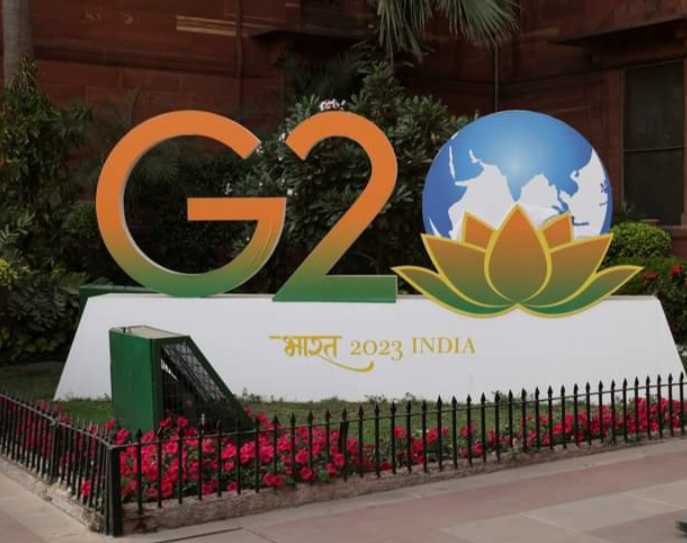
The G20 is a group of countries with the 20 strongest economies in the world. G is the first letter of the word Group stands for ‘Group’. Its significance is a huge share of 85% of the total world production, 75% of the total world trade, and 2/3 of the total world population. Looking at all these statistics, it is easy to understand why the meetings of this group are given such importance at the international level.
The origins of the G20 lie in the Asian financial crisis of 1999. Before that, the group consisted of only 7 countries. These countries were America, England, Japan, Canada, Germany, France, and Italy. Also, it was only a group of finance ministers of different countries.
In September 1999, the G7 group of countries unanimously decided to expand in order to speed up economic progress, recognizing the impact of economic developments in one country on other countries. Also, Bretton Woods (a suburb in Washington Here, in 1944, the international currency agreement was made, the unit of international exchange Gold, was linked to the US dollar, and each country began to exchange international transactions according to the strength of its currency, which was determined by the rate of the dollar).
The assumption behind it was that by linking the fluctuations in the price of gold to the dollar, it would reduce the imbalance in it and help a country recover from economic recession. Also, credit supply and recovery is easy for organizations like IMF (International Monetary Fund), which provide international loans. It can be seen from the policy of the G7 at that time that it became a model of the new international economy. It was observed that by the strategy of ‘establishing deep relations among strong economies of the world and implementing a sustainable model of economic and financial system which will not collapse easily, the goal of global economic growth can be achieved with the benefit to all’. On this assumption, the G-7 group was expanded with 19 countries and the European Union. Thus, the G-20 group came into existence.
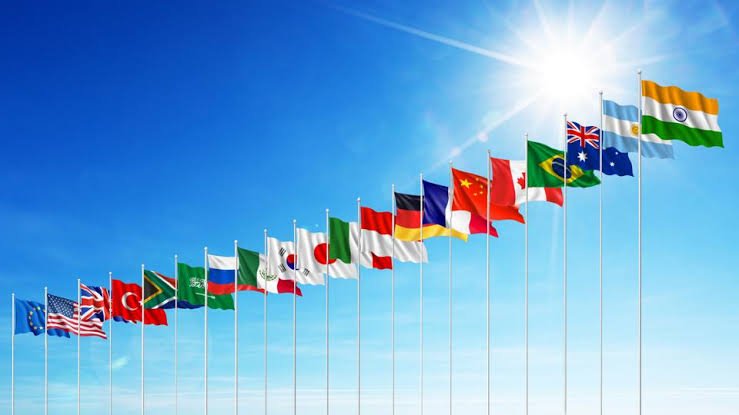
Looking at these 19 countries, every continent is represented in it. In Asia India, Indonesia, China, Japan, South Korea, Saudi Arabia, Russia (Asia and Europe), Turkey are there. In South America, Brazil, Argentina, and Mexico are there. North America is represented by Canada, the USA. Europe is represented by France, Germany, Italy, and Great Britain. Australia is a continent itself.
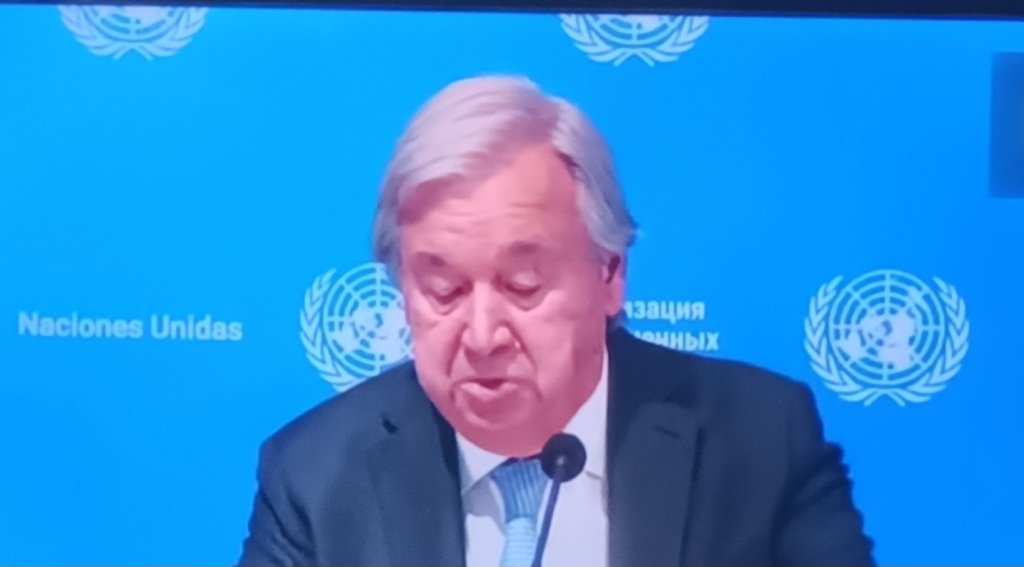
ICWA (Indian Council of World Affairs) – (An organization established in 1943. Indian think tank runs it with focus on the international affairs. According to it’s report the main motivation behind the establishment of G20 was to create a low risk sustainable economic model. This was to bring into existence a global economic system with regularity and continuity in growth. The result of all this is that each country involved into it, started working with dedicated spirit to reduce the severity of the financial crisis after any shock to the global economy and its good visible results were seen, especially after 2008. Because, earlier the meetings of this group were attended only by the finance ministers of the countries. But later, as the President and Prime Minister of the country started meeting together, the decisions became quick, and the fluctuations in the global economy started to decrease.
As countries’ economies were bound by global norms, excessive financial concessions, economic protectionism, and dodgy debt were hit hard. To strengthen the network, G20 established FSB (Financial Stabilization Board) from which packages of financial assistance were given to the countries caught in economic perils.Due to the integration of international financial laws, controls and policies, the growth of trade and economic relations between countries brought order and unity to the global economy. International financial unity increased by bringing discipline in lending and credit, re-introducing credit to countries in financial crisis, and providing substantial aid to the developing countries.
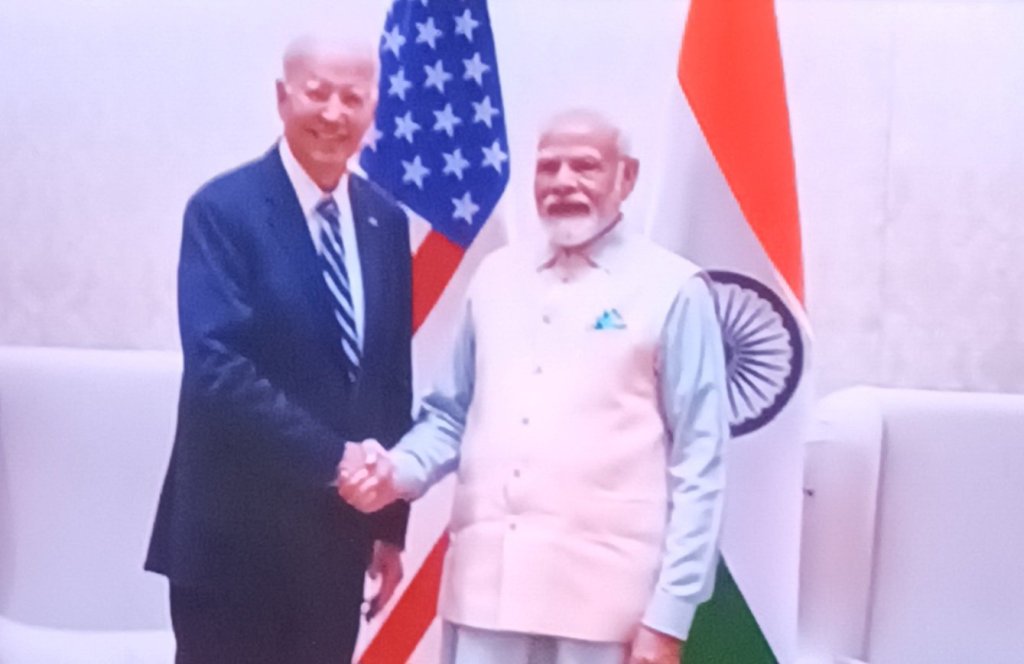
It wasn’t all foolproof, but it created a much more controlled global economy than ever before. At the same time, with the direct participation of heads of state in the G20, this group for economic awareness, control, measures and economic growth began thinking about other issues too, such as trade, energy, environment, sustainability, climate warming , corruption, terrorism to name a few. The reflection of the impact of the arrival of many subjects was seen on the mutual relations of the participated countries too. Many times, along with the main meeting, bilateral meetings were held on the sidelines over other matters. India-US, India-France bilateral meetings are arranged in the current grand get-together, too. International politics appeared in the absence of heads of state, too. Due to the deterioration of Russia’s relations at the international level after Russia’s invasion of Ukraine, an arrest warrant has been issued for the President of Russia, Vladimir Putin, so he will not be present, but his Foreign Minister Lavrov will represent Russia.
BRICS, another international group consisting of India, Brazil, China, Russia, South Africa, met in South Africa recently before the G20 starts, Its show was dominated by, especially, giving membership to African countries and anti-American countries. Chinese President Xi Jinping preferred not to attend G20, perhaps for various reasons. The Chinese publication of maps showing controversial inclusion of parts of the Asia-Pacific and Russia, inclusion of Indian state of Arunachal Pradesh and Aksai Chin as part of China , tensions on the India-China border, deteriorating Sino-American relations and growing closeness of the US with India might be the reasons. Until now, the Chinese president has not missed a meeting of the G20 even during the Corona period, so his absence is keenly felt.
Grain prices have been tight since Russia pulled out of the previous ‘grain-deal’, halting Black Sea grain exports from Ukraine. The third world countries, especially African countries, are feeling the crunch severely. Shortage and inflation of the grains made life difficult in these countries. Russia has already lured the African countries by meeting them separately in the Afro-Russian summit held in Russia and offered them discounted grain and arms supply as a bonus.
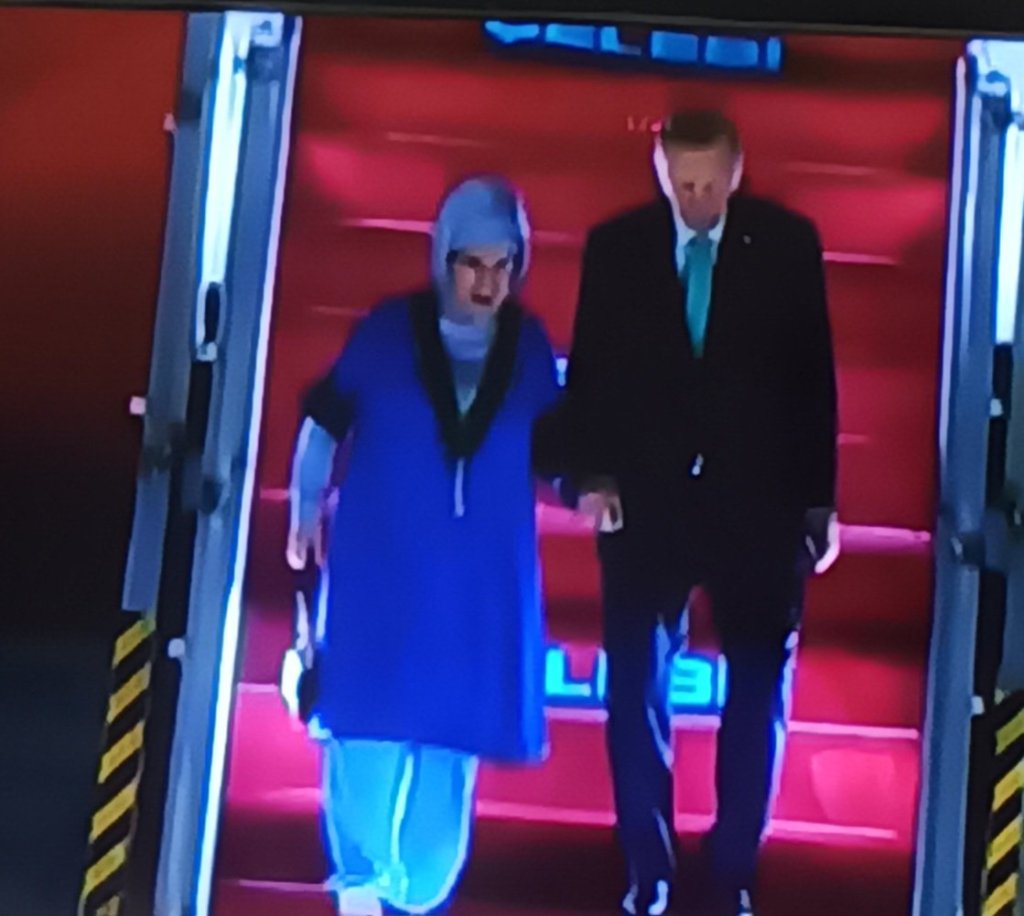
Turkish President Erdogan, who succeeded in cracking the previous grain deal along with the United Nations and convinced Russia to allow the grain transportation and export from Ukraine safely. The Turkey President has already met with Russia before the G20 meeting starts to resolve the impasse by Russia. He has said that there are hopes and didn’t divulge the details of the meeting. Perhaps he is looking for the right venue and time and may declare something about it in the G20 summit.
This time, too, there might be no unanimity in protesting Russia. These subjects are a bit deviation from the original agenda of G20 but interlinked. Unfortunately, international media is giving hype to only these differences.
India is the 17th country to host the G20 international conference by ‘rotation’. The 2024 meeting is in Brazil, and the 2025 meeting is in South Africa.
The previous G20 meeting in 2022 was held in Indonesia. Among the topics were global health framework, digital advancement, sustainable energy, and its transition. The 2021 meeting was held in Rome. It included small and medium scale businesses, women and industry, and private sector participation in global warming control and sustainable development. The 2019 meeting in Japan focused on the global economy, trade and investment, innovation, job creation, and women’s empowerment. The 2018 meeting in Argentina focused on future employment and work patterns, infrastructure, and a future free of food shortages. The breadth and depth of the G20 can be seen from the fact that cryptocurrency, US-China trade wars have come up.
India has organized this meeting on the principle of ‘Vasudhaiv Kutumbakam'(All world is one family), and it has been divided into three sections – 1.One World – 2. One Family – 3.One Future.
It has also been strongly demanded that the African Union be made a permanent member of the G20. Africa’s mineral resources, the need of African forests to lessen the global warming, the growing military insurgency there, the spread of Islamic extremism and jihad, and the progressive reforms that have begun at the same time, and the 3 trillion dollar GDP (gross domestic product) of all the countries of the African Union combined, are the reasons for grabbing the attention of the entire world. The focus is now on Africa. US President Joe Biden has already given the green signal to it.
Indian Prime Minister Narendra Modi, in a lengthy interview to PTI on the G20, said that by the end of India’s presidency, nearly 1 lakh foreign delegates would have visited India. They will go to different places and different provinces in India. They will experience the unity of their country, land, democracy and diversity and see firsthand what India has developed and will be convinced that what is required for global development has already been done in India on a grand scale. He insisted on human-centered development, and he said that he believes that the development of the poor and developing countries of the third front is the opportunity to shape the future of the world.
Prime Minister Modi has organized and implemented the G20 very efficiently. Aren’t such international conferences held in the past, too? But have we seen the subject, which used to be limited only to the Prime Minister’s office, Finance Minister’s office, Foreign and Foreign Minister’s offices and did not go beyond a handful of economic experts in the country, scholars of international subjects and New Delhi, is simply made public.
There were over 200 meetings in 60 cities and in 28 states for the G20 meet. This is unprecedented. It is difficult for the next country to follow the precedent laid by India.
the Moon and Sun Missions by the Indian scientists was a huge success achieved in a very short time period before G20 started and made the whole world take notice of it. There is hardly any reason to say that the Indian Prime Minister has done this, keeping in mind the general elections. And, even if it is true, will it lessen the commercial and international gains India is going to make? Previous international conferences have never gone beyond Delhi and the experts in that field. Although in present times, everyone knows how international economics and politics are going to affect our ordinary lives. But before this Modi blitzkrieg of knowledge, people hardly knew what the G in G20 stands for.
 the-curators.org
Leave a comment