The Israel – Hamas war in the Middle East is continuing. The trade routes in the the Red Sea are increasingly threatened by Houthi attacks and the retaliatory air attacks by the US and UK on Iraq, Syria, and Libya on several sites have brought back Iran into the picture again. With the US warning Iran and threatened with direct attacks, the entire region is tense. Saudi Arabia, Qatar, Turkey, and Iraq are on the US side, while Iran, Syria, are definitely not. What Iran originally was, what it became before dawning the present avatar needed to be scrutinized….. The Background Of Iran, its oil, and animosity with the US are given below in an article originally published in 2019.
WITHER IRAN?
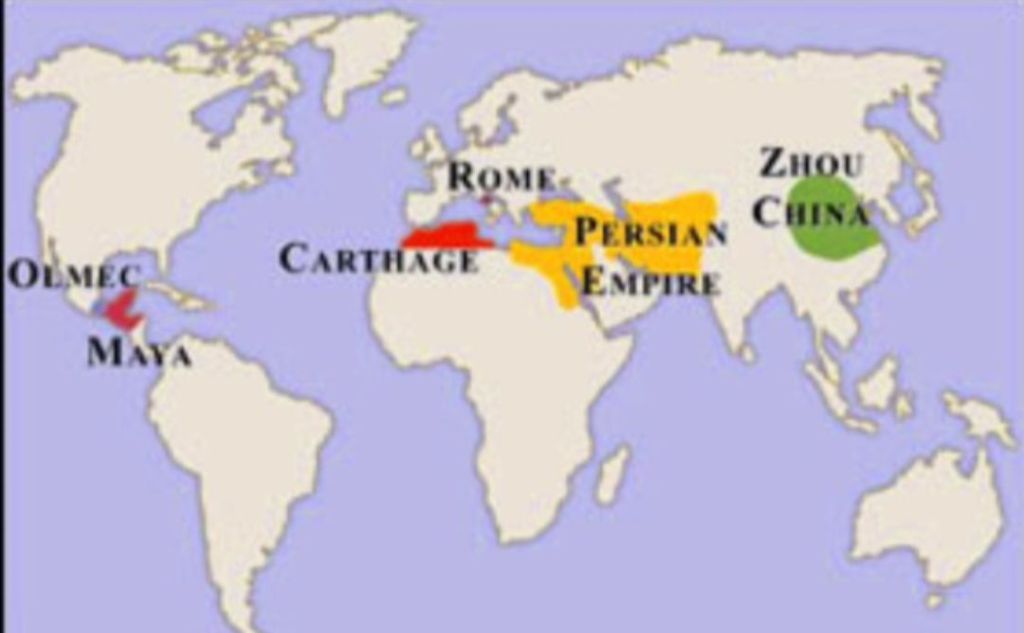
The Persian empire was stretched from Central Asia to North Africa and from Balkan countries of Europe to the Middle East and up to present-day Pakistan. Persia is the Greek name, meaning the land to the west of Central Asia. Persia, later on, embraced the Muslim religion in the mid 6th -7th century. It was recognised by the name of Persia until 1935. Iran was a mighty nation equal to a status of a superpower nation in those times.
In 1913, when the oil reserves found at Abadan and news spread across the world, World Power, like Great Britain, immediately seized upon it and brought up the rights of oil extraction and refinement. It also took care to give only 17% of profit share to Iran in the usual way of imperial exploitation.
The history of the company we now call BP has, over the last 100 years, traced the arc of transnational capitalism. Its roots lie in the early years of the twentieth century when a wealthy bon vivant named William Knox D’Arcy decided, with encouragement from the British government, to begin looking for oil in Iran. He struck a concession agreement with the Iranian monarchy, using the proven expedient of bribing the three Iranians negotiating with him. Under this contract, which he designed, D’Arcy was to own whatever oil he found in Iran and pay the government just 16% of any profits he made – never allowing any Iranian to review his accounting. After his first strike in 1908, he became the sole owner of the entire ocean of oil that lies beneath Iran’s soil. No one else was allowed to drill for, refine, extract, or sell “Iranian” oil.
“Fortune brought us a prize from fairyland beyond our wildest dreams,” Winston Churchill, who became First Lord of the Admiralty in 1911, wrote later. “Mastery itself was the prize of the venture.”
Soon afterward, the British government bought the D’Arcy concession, which is named the Anglo-Persian Oil Company. It then built the world’s biggest refinery at the port of Abadan on the Persian Gulf. From the year 1920 into the year 1940, Britain’s standard of living was supported by oil from Iran. British cars, trucks, and buses ran on cheap Iranian oil. Factories throughout Britain were fueled by oil from Iran. The Royal Navy, which projected British power all over the world, powered its ships with Iranian oil.
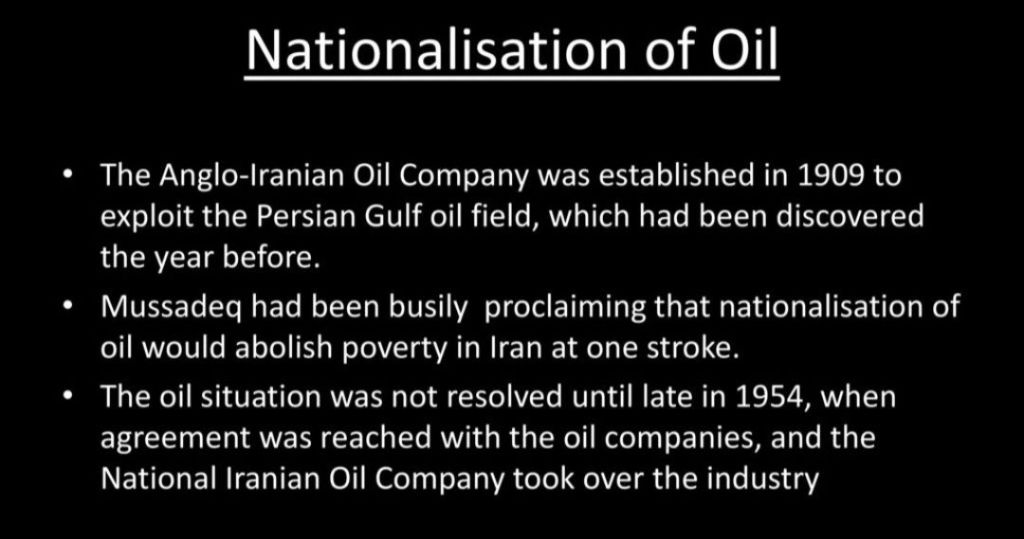
In 1951, in a daring move by ardent nationalist and popular Iranian Prime Minister Mohammad Mossadegh nationalized Iranian Oil. The intelligence and espionage specialist agencies of the US and Britain, later on, fanned insurgencies in Iran by the systemic campaign and by influencing Iranian media. The Iranian Monarch Pehelavi, under pressure of world powers, made the PM of Iran to step down and was kept in captivity in his own house till his end by the new government that had the backing of western nations. He was cremated in his own house and is a testimony of the hatred that was fanned amongst the masses against this great personality – a victim of international oil politics. The Iranian king under Western influence started to westernise Iran, further fanning the religious sentiments of common Iranians and catapulting them on streets to protest against the Shah of Iran.
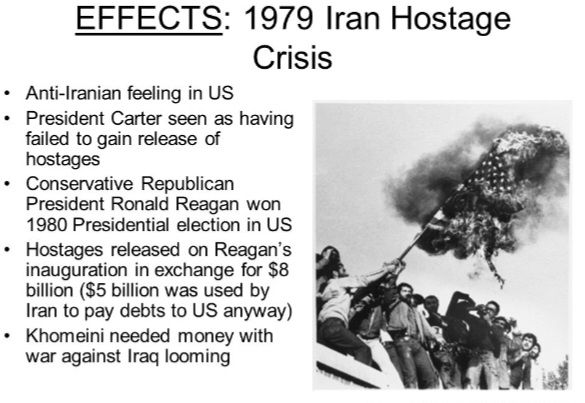
In 1970, there were large and violent protests opposing the rule of the Shah, compelling him to clamp emergency for an indefinite period on Iran. The traditional Muslim values and lifestyle were revived again. Shah, at last, had to leave Iran fearing his life. The transformation began with the arrival of deported religious preacher Ayatollah Khomenei, and Iran was declared a ‘Muslim Nation.’ The anger fanned by religious preachers turned Iranian opinion against Western nations; particularly for the United States. This anger was so strong that the American embassy was attacked, and the American employees of the embassy were held hostages for an all record-breaking time of 444 days. This happening was explosive, and all the world was agog with the sheer scale of the event. Then US President Jimmy Carter appealed, warned, imposed sanctions on Iran without any effect. The US deported Iranian students learning in the US, broke all diplomatic relations with Iran, instigated other countries against Iran, and carried out secret military operations. But these moves could not dent the Iranians and were totally proven useless and ineffective. Iran imposed insulting conditions for the release of hostages on the US, which were accepted by and the hostages were freed.
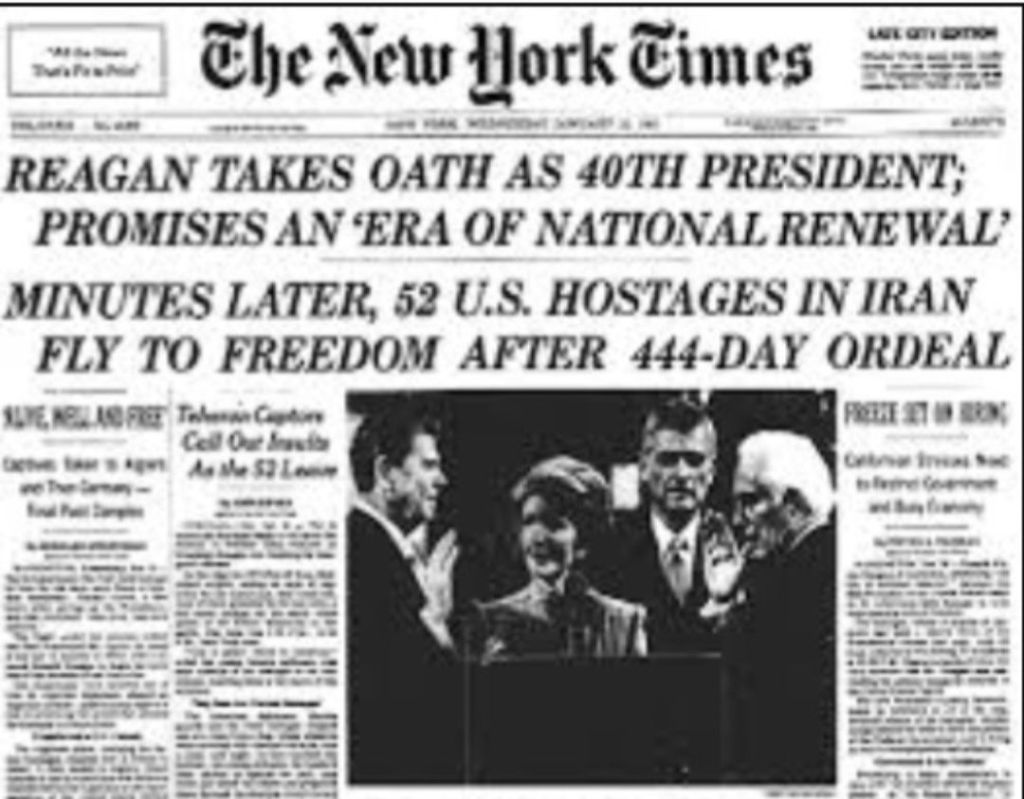
In 1980’s Iran-Iraq war took place. America backed Iraq. The American opinion and the mood was anti-Iran, as everybody assesses the situation rummaging the past without impartiality. Oil diplomacy has found yet another victim with far-reaching effects in the middle-east region. Iraq attacked Kuwait afterwards, Iran didn’t involved in the conflict and stayed impartial.
The history of the region took another turn when the US went after Iraq’s despot Saddam Hussein and attacked Iraq and subsequently found and hanged Saddam Hussein. Meanwhile, the Palestine issue, Israel, Saudi Arabia -Iran efforts to dominate the region continued. Yemen, Libya, and many other countries in the region started to witness restive people and their mass moments to topple uncontrolled regimes after regimes of despots. ……….. To continue
 the-curators.org
Leave a comment