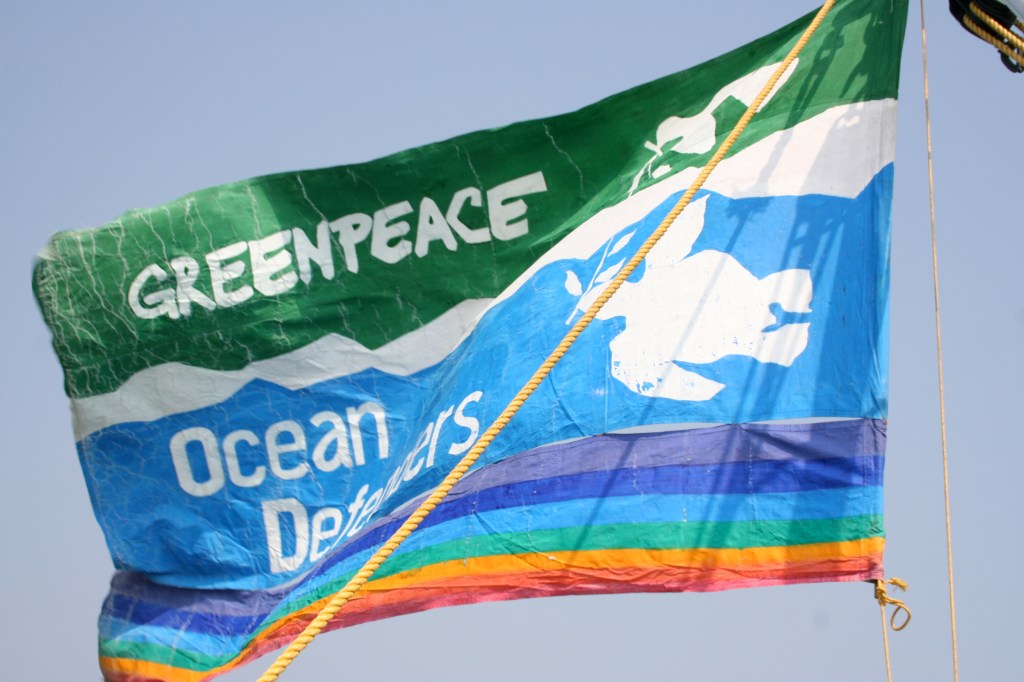

E-Mail from Greenpeace.
Climate Change, Global Warming, Environmental Balance, and Pollution are issues of paramount importance before the Mankind. These issues have started to define a nation’s future, progress, sustainable energy and wealth, awareness, and international relations, too! So, these environmental conditions are not any more of scientific values but long back entered into the daily lives of a common man! And, are getting reflected into Foreign Policy, International Relations & Global Summits.
These thoughts occurred in my mind when I received an email from Greenpeace, a global environmental organization. The subject line is Oceans and High Seas Treaty.
The message was simple and short, encompassing a huge potential. So its further expansion, like what exactly is Greenpeace, High Seas Treaty, present condition of Seas and Oceans, threats is necessary. The text of the message from Greenpeace is given below.
Hello Milind,
The oceans are our planet’s lifeline!
Our survival depends on healthy oceans, and now, more than ever, they depend on us. A sustainable future relies on their protection, and the Global Oceans Treaty is our only chance to make that happen. The great news? India is stepping up to join the global effort in ocean conservation!
What is India’s stand?
Over a year after 90+ countries endorsed the High Seas Treaty in March 2023, India has finally decided to join the list. On July 2, the Cabinet gave the green light to sign and ratify the treaty. This move not only strengthens India’s strategic reach beyond its Exclusive Economic Zone (EEZ) but also contributes to the global mission of creating ocean sanctuaries where marine life can thrive once again.
Why do we have to act fast?
Back in 2005, Greenpeace made waves by calling for a new treaty under the UN Convention on the Law of the Sea. Fast forward to today, and we’re closer than ever to achieving this vision. This journey proves that when people unite for a cause, they can truly change the world.But, rising global temperatures, warming waters, overfishing, and pollution are driving marine ecosystems to the edge of collapse. World must unite to bring the treaty into effect to create critical ocean sanctuaries.We must urge our national leaders to speed up the process and swiftly sign and ratify the treaty. The world is watching; let’s ensure India takes a leading role in this vital mission to protect our oceans before it’s too late! Sign the petition to make them act. Help Save Our Oceans With hope, Greenpeace Community
Greenpeace India, New No. 47, (Old No.22),, II Cross, Street Ellaiamman, Gopala Puram, Chennai, Tamil Nadu 600086, India. Greenpeace.india@act.greenpeace.org
Environmental Status of the Seas & Oceans: A Troubling Trend
The global seas and oceans are facing a significant environmental crisis. Human activities over the past century have led to a dramatic decline in marine health. Here are some of the most pressing issues-
Pollution: Plastic pollution, oil spills, and chemical runoff are major threats to marine ecosystems.
Plastic waste, in particular, has become a pervasive problem, harming marine life and contaminating food chains.
Overfishing: Unsustainable fishing practices have depleted fish populations to critical levels, disrupting marine ecosystems and impacting food security.
Climate Change: Rising ocean temperatures, acidification, and sea-level rise are altering marine habitats and affecting marine species. Coral reefs, in particular, are highly vulnerable to climate change.
Habitat Loss: Coastal development, pollution, and overfishing are destroying marine habitats, including mangroves, seagrass beds, and coral reefs, which are crucial for biodiversity and ecosystem health.
The consequences of these environmental challenges are far-reaching. Marine ecosystems play a vital role in regulating the climate, providing food, and supporting coastal economies. The decline in marine health threatens the livelihoods of millions of people and the well-being of the planet as a whole.
Addressing the environmental crisis in the seas requires a concerted global effort. This includes implementing sustainable fishing practices, reducing pollution, mitigating climate change, and protecting marine habitats. Governments, businesses, and individuals all have a role to play in ensuring the health and sustainability of our oceans.
Greenpeace
Greenpeace is a global environmental organization known for its nonviolent direct actions and campaigns. Founded in 1971 in Canada, it has since expanded its operations to over 55 countries. Greenpeace’s mission is to protect the planet and ensure a future for life on Earth.
Key Focus Areas
Climate Change: Advocating for a transition to renewable energy and reducing greenhouse gas emissions.
Deforestation: Campaigning to protect forests and combat illegal logging.
Ocean Conservation: Working to protect marine ecosystems and prevent overfishing.
Whale and Dolphin Conservation:
Nuclear Energy: Opposing nuclear power and promoting a shift towards renewable energy sources.
Genetic Engineering: Critiquing the use of genetically modified organisms (GMOs) and advocating for organic agriculture.
Direct Actions and Campaigns –
Greenpeace is renowned for its creative and often controversial direct actions, which aim to draw attention to environmental issues and pressure governments and corporations to take action. These actions can include:
Protests and demonstrations: Organizing peaceful protests and demonstrations to raise awareness about environmental concerns.
Blockades and occupations: Blocking access to environmentally harmful sites or activities.
Legal challenges: Pursuing legal actions to hold governments and corporations accountable for environmental damage.
Investigative journalism: Exposing environmental crimes and abuses.
The High Seas Treaty
Also known as the Agreement on Biodiversity Beyond National Jurisdiction or BBNJ, which is a legally binding instrument for the conservation and sustainable use of marine biological diversity of areas beyond national jurisdiction This treaty aims to protect the vast expanse of the high seas, which covers about half of the Earth’s surface and 95% of the ocean’s volume.
Key points about the High Seas Treaty:
Addresses governance gaps: The treaty addresses the lack of clear rules and regulations for protecting marine biodiversity in the high seas.
Establishes marine protected areas: It allows for the creation of marine protected areas in the high seas, safeguarding important ecosystems and species.
Promotes sustainable use: The treaty encourages responsible and sustainable use of marine resources, such as fishing and mining.
Recognizes traditional knowledge: It acknowledges the importance of traditional knowledge held by indigenous communities and local people.
Addresses climate change: The treaty recognizes the impacts of climate change on marine ecosystems and promotes measures to mitigate these effects.
Status of the treaty:
The High Seas Treaty was adopted by the United Nations in June 2023. However, it is still awaiting ratification by enough countries to enter into force. Once ratified, the treaty will become a powerful tool for protecting the high seas and ensuring its sustainable use for future generations.
Link to the subject and, for more ⏬️
https://en.wikipedia.org/wiki/High_Seas_Treaty
Contribution of Greenpeace in ocean conservation and to protect marine ecosystems for future generations.
Greenpeace has been a leading force in ocean conservation, advocating for the protection of marine ecosystems and combating threats like overfishing, pollution, and climate change. Here are some of its key initiatives and accomplishments:
Campaigning against unsustainable fishing practices: Greenpeace has pushed for stricter fishing regulations and quotas to prevent overfishing and protect marine populations.
Promoting sustainable fishing methods: The organization supports sustainable fishing practices like line fishing and aquaculture that minimize harm to marine ecosystems.
Addressing plastic pollution: Greenpeace has been at the forefront of the fight against plastic pollution, advocating for bans on single-use plastics and promoting recycling initiatives.
Combating oil spills: The organization has responded to major oil spills, such as the Deepwater Horizon disaster, by providing assistance and advocating for stricter regulations to prevent future incidents.
Climate Change:
Protecting polar regions: Greenpeace has campaigned to protect the Arctic and Antarctic regions from the impacts of climate change, including melting sea ice and habitat loss for marine species.
Advocating for renewable energy: The organization promotes the transition to renewable energy sources to reduce greenhouse gas emissions and mitigate climate change.
Protecting cetaceans: Greenpeace has worked to protect whales and dolphins from threats like hunting, entanglement in fishing gear, and habitat destruction.
Promoting whale sanctuaries: The organization supports the creation of whale sanctuaries to provide safe havens for these magnificent creatures.
Addressing the impacts of ocean acidification: Greenpeace has raised awareness about the harmful effects of ocean acidification, caused by increased carbon dioxide levels, on marine ecosystems.
Promoting sustainable seafood choices: Greenpeace has developed guides and campaigns to educate consumers about sustainable seafood options and encourage them to make informed choices.
After heavily mining the soil, man has turned his attention to Sea Mining. A commercial activity posing immense dangers to marine habitat and ecosystems.
Sea Mining:
A Controversial Practice.
Sea mining is the process of extracting minerals from the seabed. This practice has gained increasing attention in recent years as land-based resources become depleted and demand for minerals like cobalt, nickel, and manganese increases. However, sea mining also raises significant environmental concerns.
Types of Sea Mining
There are two main types of sea mining:
Manganese nodule mining: This involves extracting nodules from the deep seabed that contain valuable minerals like manganese, nickel, cobalt, and copper.
Sulfide mineral mining: This involves extracting sulfide minerals from hydrothermal vents, which are underwater volcanic features that release hot, mineral-rich fluids.
Environmental Concerns
Sea mining poses several environmental risks, including:
Habitat destruction: Mining activities can disrupt fragile seabed ecosystems, harming benthic organisms and affecting biodiversity.
Sediment plumes: The process of mining can create sediment plumes that can smother corals and other marine life.
Noise and light pollution: Mining operations can generate noise and light pollution that can disturb marine animals.
Climate change: Sea mining can contribute to climate change by releasing stored carbon from the seabed.
International Regulations
To address these concerns, international organizations and governments have been working to develop regulations and guidelines for sea mining. The International Seabed Authority (ISA) is a United Nations agency responsible for regulating activities in the international seabed area. However, the development of a comprehensive regulatory framework for sea mining remains a challenge.
Would you like to know more about the specific environmental impacts of sea mining or the ongoing discussions regarding international regulations?
Specific Environmental Impacts of Sea Mining
Habitat Destruction
* Benthic ecosystems: Seabed mining operations can directly destroy benthic ecosystems, which are communities of organisms that live on or near the seafloor. These ecosystems are often fragile and slow to recover.
* Coral reefs: Mining activities can damage coral reefs, which are vital for marine biodiversity and coastal protection. Sediment plumes from mining can smother corals and reduce their ability to photosynthesize.
Sediment Plumes
* Smothering of marine life: Sediment plumes can smother marine organisms, including fish, invertebrates, and corals. This can lead to reduced biodiversity and ecosystem disruption.
* Water quality: Sediment can also degrade water quality, reducing sunlight penetration and affecting the health of marine ecosystems.
Noise and Light Pollution
* Disruption of marine behavior: Noise and light pollution from mining operations can disrupt the behavior of marine animals, such as fish, whales, and dolphins. This can interfere with their feeding, mating, and communication.
Climate Change
* Release of stored carbon: Seabed sediments can store significant amounts of carbon. Mining activities can disturb these sediments, releasing stored carbon into the atmosphere and contributing to climate change.
Ongoing Discussions Regarding International Regulations
The International Seabed Authority (ISA) is the primary international body responsible for regulating activities in the international seabed area. It has been working to develop a regulatory framework for sea mining, but progress has been slow.
Key issues that are being debated include:
* Environmental impact assessments: The ISA is working to develop guidelines for environmental impact assessments to ensure that mining activities are conducted in a sustainable manner.
* Mining codes: The ISA is also developing mining codes to establish rules and regulations for mining activities.
* Revenue sharing: There are discussions about how to allocate the revenues generated from sea mining. Some propose that a portion of the revenues should be used to fund marine conservation and sustainable development.
Despite these ongoing discussions, there is still no comprehensive regulatory framework for sea mining. The lack of clear rules and regulations has led to concerns about the potential for environmental damage and the exploitation of seabed resources
 the-curators.org
Leave a comment