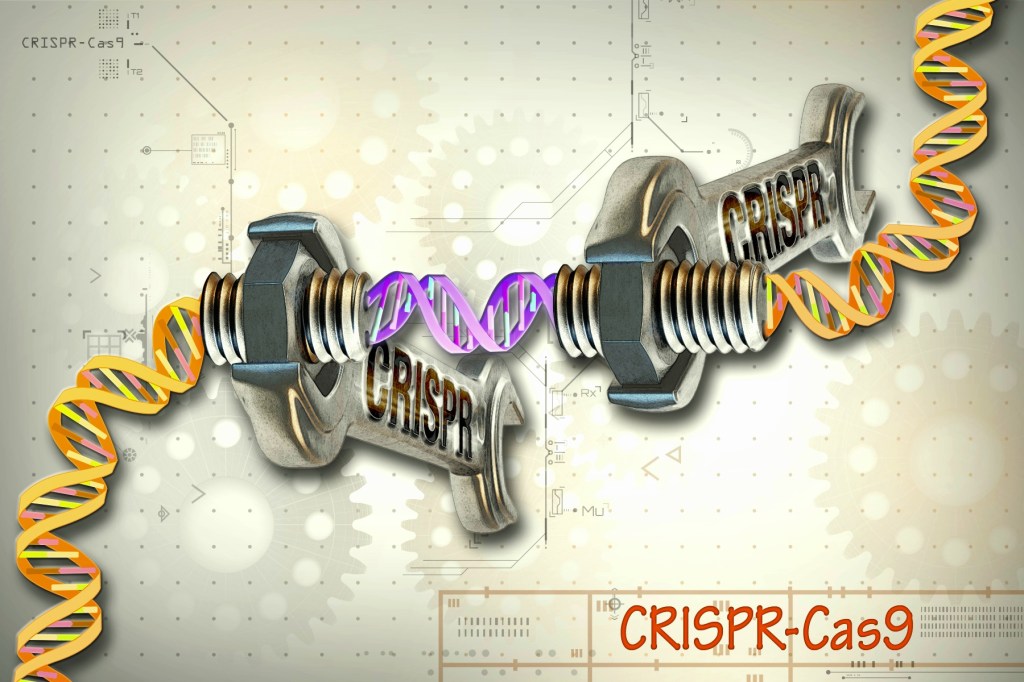
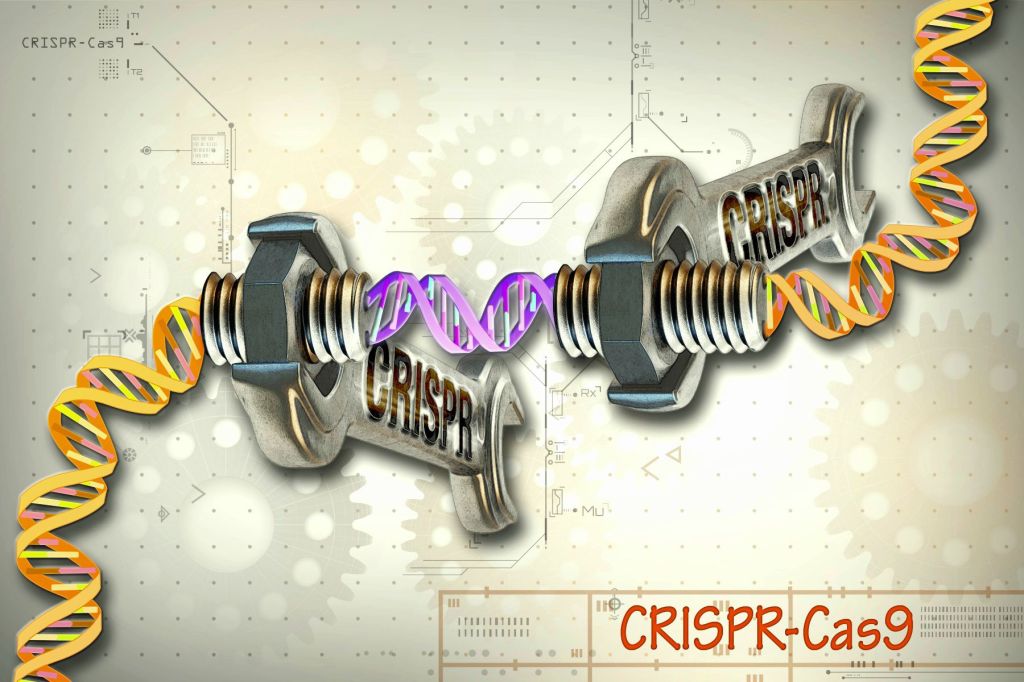
In the awareness series today, a special write-up on the latest bio tech – The Gene Editing. It offers tremendous potential in correcting , treating, and curing. It can of immense value to humans. If it falls in the wrong hands , well, like all other inventions, it can be a new Frankenstein in making. Because we dvelve, as usual on the negative side of things. Let’s hope for the best!
CRISPR (Clustered Regularly Interspaced Short Palindromic Repeats) Tech.
CRISPR Gene Editing Technology
is a revolutionary gene editing technology that allows scientists to precisely modify the DNA of living organisms.
It’s inspired by a natural defense mechanism found in bacteria.
How it works:
Guide RNA (gRNA): This is a synthetic RNA molecule that acts as a GPS, guiding the CRISPR-Cas9 system to the specific DNA sequence to be edited. Cas9 Enzyme: This is a protein that acts like a pair of molecular scissors. It cuts the DNA at the target location specified by the gRNA.
Editing: Once the DNA is cut, scientists can add, remove, or replace specific DNA sequences.
Applications & Advantages-
Disease Treatment:
CRISPR has the potential to treat genetic diseases by correcting faulty genes.
Agriculture: It can be used to create crops that are resistant to pests, diseases, and environmental stresses.
Research: Scientists use CRISPR to study gene function and develop new drugs.
CRISPR can target specific genes with high accuracy. It is a relatively efficient and cost-effective method. It can be used to edit a wide range of organisms.
Treatment of Genetic Diseases: CRISPR can be used to correct faulty genes that cause genetic disorders, such as cystic fibrosis, sickle cell anemia, and Huntington’s disease.
Cancer Therapy: Scientists are exploring the use of CRISPR to modify immune cells to target and destroy cancer cells more effectively.
Viral Infections: CRISPR could potentially be used to develop antiviral therapies by targeting and disabling viral genomes.
Agriculture.
Disease Resistance: CRISPR can be used to create crops that are resistant to pests, diseases, and environmental stresses. Nutritional Enhancement: Scientists are working on using CRISPR to improve the nutritional content of crops, such as increasing the levels of vitamins or proteins.
Biofuels: CRISPR could be used to engineer plants that produce higher yields of biomass for biofuel production.
Research.
Gene Function Studies: CRISPR allows researchers to study the functions of individual genes precisely by disabling or modifying them.
Model Organisms: CRISPR can be used to create genetically modified model organisms, such as mice and flies, for studying diseases and biological processes.
Drug Discovery: CRISPR can be used to screen for potential drug targets and to develop new drugs.
Environmental
Conservation: CRISPR could be used to restore endangered species or to control invasive species.
Bioremediation: CRISPR can be used to engineer microorganisms that can degrade pollutants and also clean up contaminated sites.
Ethical Considerations:
While CRISPR offers immense potential, it also raises ethical concerns, such as the possibility of unintended consequences and the potential for harmful genetic engineering of humans.
 the-curators.org
Leave a comment