🌏Views with selective news dissemination.
Update-15/09/2024. India is cautiously following the Chinese statement about disengagement of troops from four areas in the eastern Ladakh sector on the India-China border. Indian External Affairs Minister S. Jaishankar also corroborated that the 75 percent of disengagement issues solved but expressed his concerns over the ongoing militarization. The history of earlier China’s sudden invasion in the 1960s after the bonhomie of ‘India-China’ Bhai Bhai’ might be the reason behind the cautious approach of media and Indian think tank to the news. A fresh link is provided below ⏬️
BREAKING NEWS :
livemint.com says The Chinese Foreign Ministry said Friday that troops have withdrawn from four locations in Eastern Ladakh, including Galwan Valley.
Success to Doval diplomacy!
The news in livemint.com further says :
It also highlighted that during their recent meeting in Russia, India and China have agreed to collaborate on creating favorable conditions for enhancing bilateral relations.National Security Advisor Ajit Doval and Chinese Foreign Minister Wang Yi held talks on the sidelines of a meeting of the BRICS.
A link to the news is given below ⏬️
Another corroborative link from Indian Express is below ⤵️
THE DISPUTE:
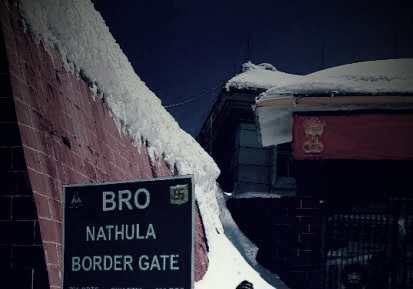
The India-China border dispute is a long-standing territorial disagreement between the two countries. It centers on the disputed Line of Actual Control (LAC), a de facto border that separates Chinese-controlled and Indian-controlled territory along the Himalayas.
Key points about the dispute:
* Disputed territory: The main areas of contention are the western sector (Aksai China) and the eastern sector (Arunachal Pradesh).
* Historical context: The dispute stems from conflicting claims over the region dating back to the British colonial era.
* 1962 Sino-Indian War: The most significant event in the dispute was the 1962 war, which resulted in China’s victory and occupation of Aksai China.
* Ongoing negotiations: Despite numerous rounds of talks and agreements, the dispute remains unresolved.
* Recent tensions: In recent years, there have been several incidents of clashes and standoffs between Indian and Chinese troops along the LAC, raising concerns about the potential for further escalation.
Key factors contributing to the dispute:
* Strategic importance: The disputed areas are strategically important to both countries due to their proximity to vital infrastructure and resources.
* National pride: The dispute has become a matter of national pride for both countries, making it difficult to find a compromise.
* Geopolitical rivalry: The growing rivalry between India and China in the region has further complicated the issue.
Possible solutions:
* Negotiated settlement: The most likely solution is a negotiated settlement that involves both countries making concessions.
* Joint development: Both countries could agree to jointly develop the disputed areas, sharing the benefits and reducing tensions.
* Third-party mediation: A third party, such as the United States or Russia, could help mediate the dispute.
It is important to note that the India-China border dispute is a complex issue with no easy solutions. However, finding a peaceful and mutually acceptable resolution is crucial for maintaining regional stability and preventing a potential conflict between two nuclear powers.
___________
Ajit Doval
Ajit Doval is the current National Security Adviser (NSA) of India, a position he has been holding since 2014. He is a retired Indian Police Service (IPS) officer and a former Director of the Intelligence Bureau (IB).
Key facts about Ajit Doval:
1. *Early life and education*: Born on January 20, 1945, in Uttarakhand, India. Graduated from the University of Agra.
2. *Career*:
– Joined the IPS in 1968.
– Served in various positions, including as an officer in the IB and as a commissioner of police in Delhi.
– Served as the Director of the IB from 2004 to 2005.
3. *National Security Adviser*: Appointed as NSA by Prime Minister Narendra Modi in 2014.
4. *Key initiatives*:
– Played a crucial role in shaping India’s national security policy.
– Oversaw the 2016 surgical strikes against Pakistan-based militants.
– Involved in the 2019 Balakot airstrike against terrorist camps in Pakistan.
5. *Awards and recognition*: Received the Kirti Chakra, one of India’s highest gallantry awards, for his bravery during the 1989 Punjab insurgency.
Doval is known for his expertise in counter-terrorism, intelligence gathering, and national security strategy. He has been instrumental in shaping India’s response to regional and global security challenges.
 the-curators.org
Leave a comment