Why is the Middle East always on the boil? – The pursuit of the unpredictable!
People on both sides of the globe always puzzled and wonder why the Middle-East region on the earth is always simmering with seen, unseen tensions and imbalance.
Rapid Read
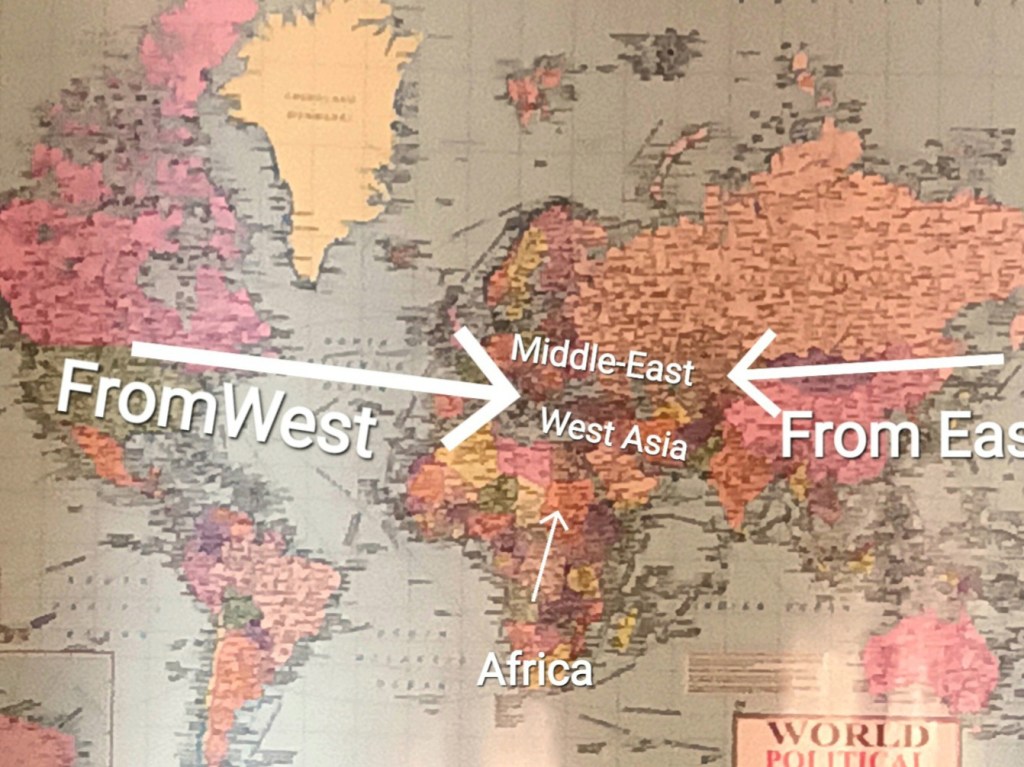
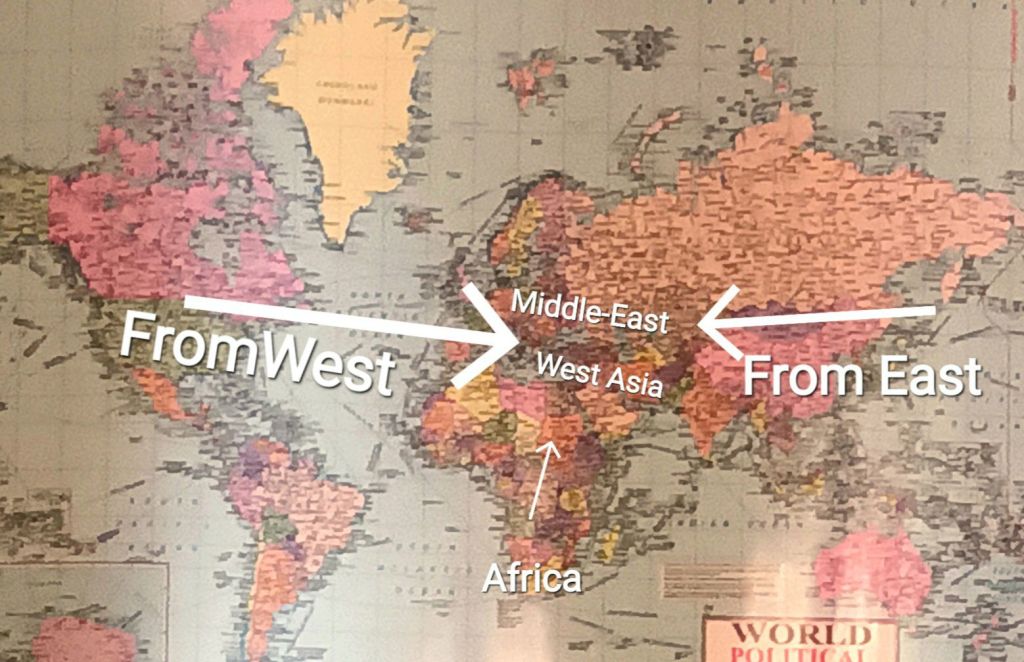
The geographical location of Middle-East where three continents of Asia, Europe, and Africa met is very significant.
The importance of trade routes & supply chains passing through the Middle-East region has acquired importance in these volatile geopolitical times.
Iran & Saudi Arabia competed for regional dominance colored by religious antagonism between Shia and Sunni faiths.
International boundaries drawn by colonial Western powers of Great Britain and France and the creation of new countries have neglected ethnic and tribal realities, faith, religious backgrounds, and geographical and demographic uniformity, making the entire Middle East unstable.
monarchies and presidential systems of rule in the region did not encourage religious tolerance, democratic thoughts, and freedom and zealously maintained rivalries with other nations in the region to keep their powers intact.
Regime changes induced by the Western powers to control oil supply marked beginning of revolts, Arab Spring fuelling uncertainties.
The Cold War days divided Middle-East countries in US and Russian camps, keeping rivalries and international tensions taught, fuelled by superpowers.
the holy sites of three major religions:
Judaism
Christianity
Islam in the Middle East never allowed to lower the tensions.
Weak states influenced by major powers of the region played proxy wars, making the weak states further unstable.
Israeli representation in the US policy and proximity to the US kept the Middle East on its toes.
●‐—————–●
Middle East LOCATION
The significance of Middle-East can be easily understood if we look at its geographical location.
It sits at the Geographic Crossroads of the Continents!
The Middle-East (‘Middle-East’ from the Western view and ‘West Asia’ from the Eastern view) connects three major continents of
Asia, Europe, and Africa.
TRADE ROUTES
As the three continents are connected here (for) thousands of years, it controlled the main trade routes between East and West. like
Silk Road routes,
Maritime trade routes between Europe and India, And , modern global shipping lanes, etc.
And, the
Important ‘chokepoints’ there include:
Suez Canal (Egypt) – connects Mediterranean Sea to the Red Sea
Strait of Hormuz (Iran–Oman) – gateway for Persian Gulf oil
Bab el-Mandeb Strait (Yemen–Djibouti) – entrance to the Red Sea
Around 20% of global seaborne oil passes through Hormuz.
So, whoever influences this region affects global trade and energy supply.
Our current times are dominated by production, supply chains, and distribution.
The keywords in the economic expansion and smooth running operations ultima
tely profiting individuals, organizations, and nations. In other words, whoever controls
these supply chains are likely to dominate the geopolitics.
OIL IN THE MIDDLE EAST
In the early 20th century oil was discovered in massive quantities.
Major reserves in:
Saudi Arabia
Iran
Iraq
Kuwait
UAE
Qatar
The Middle East holds roughly:
48–50% of proven global oil reserves
Large natural gas reserves (especially Qatar and Iran). Oil became the fuel of industrial civilization and military power.
Modern economies depend heavily on energy and controlling influence over these resources, and the Middle East became critical.
THE OTTOMAN EMPIRE ANGLE
The collapse of the Ottoman Empire created a power vacuum.
Until World War I, much of the Middle East was ruled by the Ottoman Empire. When the empire collapsed in 1918.
THE FAULTY BORDERS
European powers divided the region.
Britain and France drew many borders through agreements such as:
Sykes–Picot Agreement (1916) –
This created many modern states like
Iraq
Syria
Jordan
Lebanon
But these borders, while getting newly formed, often ignored ethnic and tribal realities, which contributed to long-term instability.
The European powers drew borders that did not match tribal, ethnic, or sectarian realities like
Iraq combines Shia Arabs, Sunni Arabs, and Kurds.
Syria contains Alawites, Sunnis, Kurds, Druze, and Christians.
Lebanon is divided among several religious communities.
Because of this, internal politics often becomes a struggle for communal survival, which external powers exploit. This adds to the regional instability.
COLD WAR POSITION
After World War II the Middle East became a battleground between:
United States and
Soviet Union.
Both sides wanted influence over
oil, Strategic bases and regional governments like the US support for Saudi Arabia and Iran (before 1979)
Soviet support for Syria, Egypt (for a period), Iraq
Even after the Cold War ended, the culminating effect was the region remained unstable.
RELIGIOUS TRUTH
The religious and Cultural practices, often bordering of fanaticism makes the scene more complicated.
The Middle East contains the holy sites of three major religions-Judaism,Christianity, and Islam.
Jerusalem especially holds enormous symbolic importance.
Religious identity (crisis & assertion) intensified political conflicts.
The instability of the region is the result of three interacting layers:
1️⃣ Inter-state rivalries (regional- international relations)
2️⃣ Weak or fragmented states
3️⃣ Sectarian divisions (especially Sunni–Shia tensions).
WEAK COUNTRIES & PROXY WARS
Weak states controlled by other nations and a large portion of the population opposed it.
There are many examples like Yemen →where we find Saudi Arabia trying to control and resisting Iranian-supported Houthis,
Syria → Iran supported the previous and now collapsed Assad regime. But the Gulf states supported opposition groups – al-Sharaa interim government,
Lebanon → Iran backs Hezbollah
Iraq → Iranian influence through Shia militias
Instead of direct wars, the region experienced proxy struggles for regional control.
These countries remained volatile and unstable due to the opposite pulling internal factors and puppet governments.
SHIA-SUNNI DIVIDE
The Shia–Sunni Divide also challenged the regional cohesiveness. The instability was evident in
regional power competition (Iran vs Saudi Arabia),
fragile state structures and
politicized sectarian identities with involvement of global powers.
All these factors reinforce each other.
THE MONARCHIES’ WISH
In many Middle Eastern states, the primary goal of the ruling system is regime survival.
Whether it is:
Monarchies (Saudi Arabia, Jordan, UAE, Qatar, Kuwait, Oman)
Republican autocracies (Egypt, Syria previously, Algeria)
their policies are often shaped by the question:
“Will this strengthen or weaken the regime?” so the internal peace was somehow maintained at the cost of regional conflicts.
Middle Eastern monarchies have historically been more stable than republics.
Examples:
Saudi Arabia
Jordan
Morocco
Gulf monarchies
They maintain stability through
Religious legitimacy
Tribal alliances
Economic patronage (oil wealth, welfare systems)
Security apparatus
For these rulers, peace is important because conflict can destabilize the internal balance of tribes, sects, and elites.
That is why many Gulf states now emphasize economic development and diplomacy.
Examples:
Saudi–Iran rapprochement (2023)
Abraham Accords between Israel and Gulf states
Saudi Vision 2030 focuses on economic modernization.
WHY THE US BACKS ISRAEL
The creation of Israel in 1948 and its proximity with the mighty US raises questions like why the US backs Israel? Why then the US couldn’t contain the violence in Gaza Strip? The answers lies in dominating Israeli representation in the US policy making for the region which sometimes quell the conflicts and many a times left simmering and unanswered adding to confusion and instability.
Jewish-American Influence in US Politics
The influence comes not simply from identity but from organization, political participation, and social presence.
Jewish Americans make up roughly:
2–3% of the US population
But they have historically had high political participation, including
voting
campaign donations
civic activism
Political engagement, which amplifies the influence in domestic politics and further policies.
There are several political donations and advocacy groups
supporting strong US–Israel relations.
The most well known among them is:AIPAC
(American Israel Public Affairs Committee), which
advocates strong US–Israel partnership,
organizes lobbying efforts,
supports candidates favorable to the alliance.
AIPAC is one among many lobbying groups in Washington.
Other powerful lobbies include oil, defense, pharmaceutical, and tech industries.
Jewish Americans have historically had a strong presence in fields like law,academia,
journalism,finance, and entertainment.
These sectors often intersect with politics and public discourse.
But this influence is diverse and not uniform. Jewish Americans hold a wide range of political views, including strong critics of Israeli policies.
Another factor that might be shaping the US policy is public sympathy after the Holocaust.
After World War II,
support for a Jewish homeland increased in the US.
Israel was seen as a refuge for persecuted people.
This moral dimension still influences American political attitudes.
Interestingly, Evangelical Christians may be an even larger political force supporting Israel than Jewish Americans.
Reasons include
religious interpretations of the Bible,
belief that Israel plays a role in biblical prophecy.
Evangelicals are a large voting bloc, especially in Republican politics.
Also, it is seen from time to time that the
US foreign policy is usually shaped by a combination of factors like strategic interests, military alliances, domestic political groups,
Economic interests and
Public opinion.
Israel benefits from alignment across several of these factors simultaneously.
The US – Israel dimension too influences the regional balance in the Middle East.
Another factor is that the Middle East or West Asia forms a major part in Global Politics.
The Middle East sits at the intersection of three major geopolitical zones of
Europe,
Russia/Central Asia and South Asia.
Control or influence in the Middle-East region affects global power balance.The world’s strategic center moved like this:
1500–1900 → Europe
1900–2000 → Atlantic world (US–Europe)
2000 onward → Gradually shifting toward Asia
And, the Middle East remains a critical hinge connecting all of them.
The control of trade routes and supply chains made and destroyed many powerful nations in the past. The sword and gun used to control the trade of spices and other Eastern specialties with colonial loot now converted to soldierless wars with missiles, drones, and bombs to trade oil and technology but from the West to the East.
 the-curators.org