At a glance–
It is the country’s political system that decides how to use the natural resources effectively for its people.
If the political system is not supported by sound and practical economic and financial knowledge and planning, it becomes catastrophic for people.
Venezuela has abundant oil but could not put it to advantage for utilizing a political ideology (leftist inclination) for self-centered political gains and not so sound financial and technical know-how.
How Oil pushed Venezuela into geopolitical crossing
The Latin American countries and their inclination towards left thinking had been a sore thumb in the US. Though the decision makers in Washington were aware, there was no open admission.
After failed attempts to change the regimes in Venezuela and Venezuela’s growing proximity to its main oil purchaser China and other countries like Russia , Iran and left inclined countries, the US president captured the Venezuelan president with his wife on 3rd January 2026 in a military action and brought back Venezuela with its oil in its fold.there was mixed response from the Venezuelan people. It is necessary to understand Venezuela’s brief history – its leftist inclination , oil discovery, short-lived prosperity, loss of business practices, and resulting prevailing conditions.
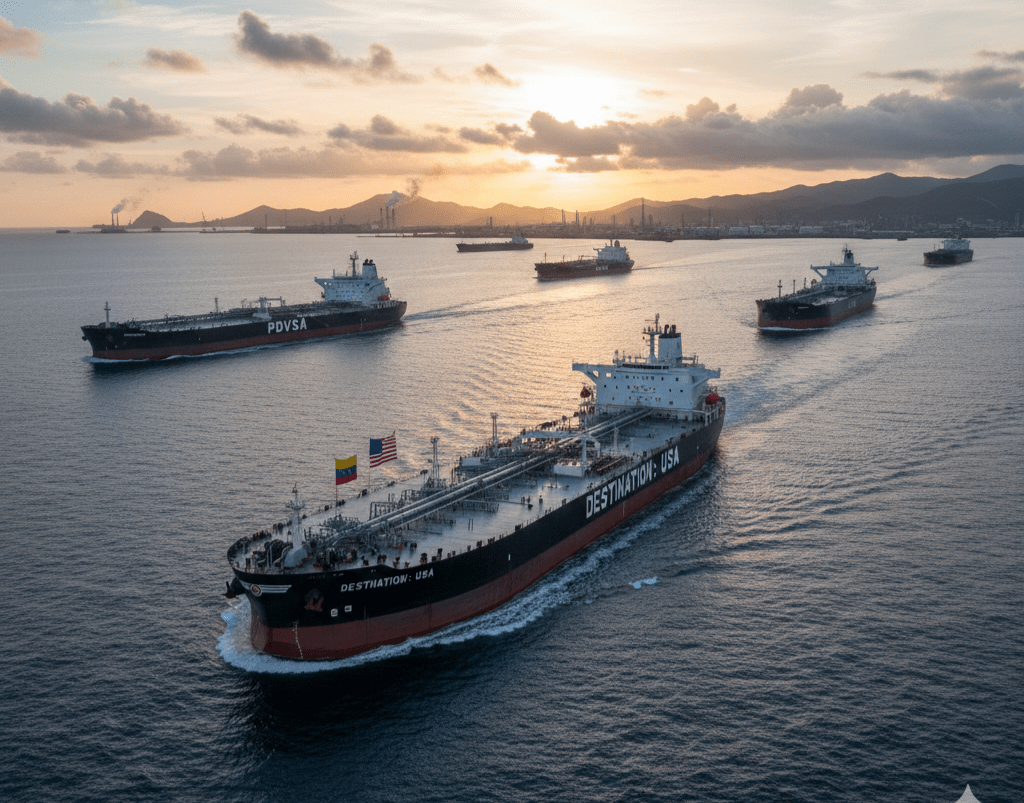
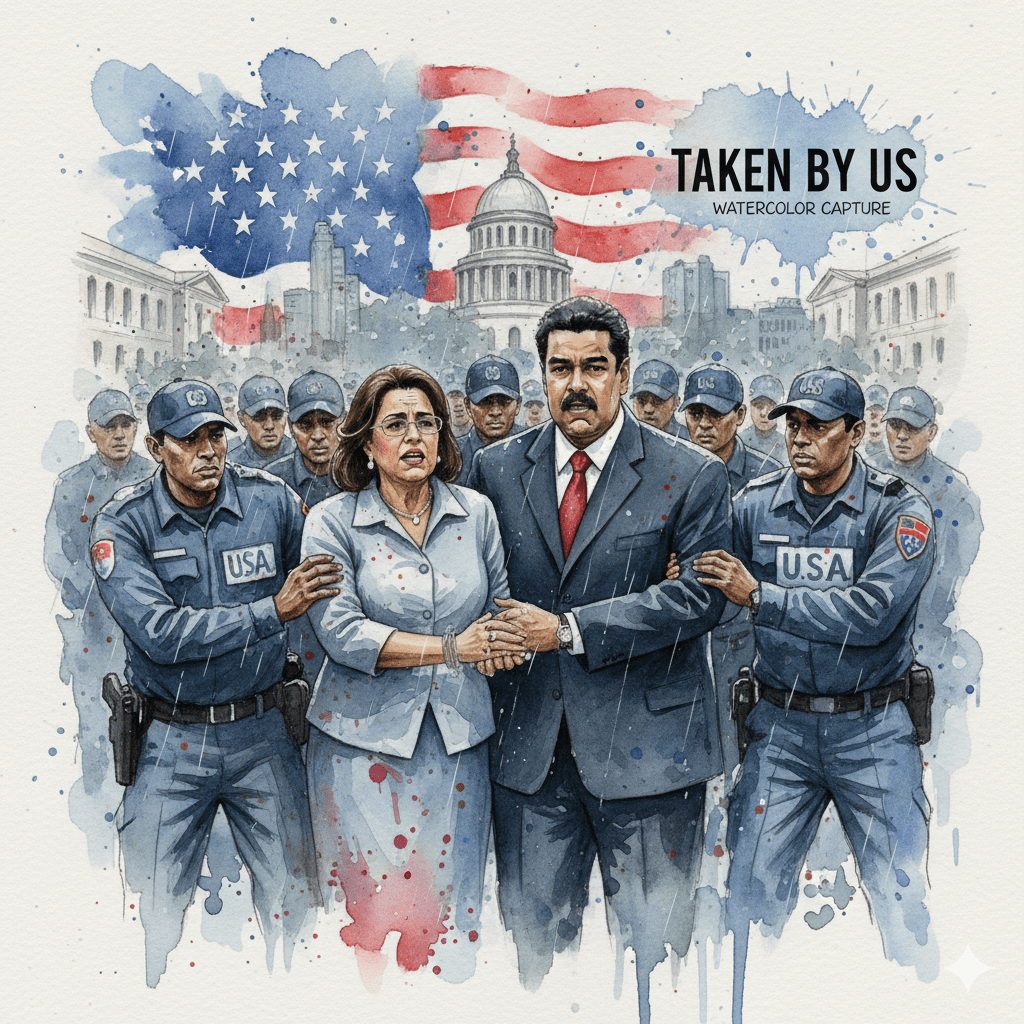
US President Donald Trump, in a complex and highly technical military operation, captured the Venezuelan president and his wife and brought them to the US. A new precedent, what would it have fetched if pursued or acted in first place by Russian President for Ukraine?
‘Monroe Doctrine’ & ‘Donroe Doctrine’ – The Trump way
A modern imperialist avtaar stun the world where the bigger countries use adjoining sovereign countries as future buffer and their inclusion as a state. With Noicolas Maduro and his wife behind US bars and the Venezuelan oil in his custody, the US president brought back the ‘Monroe Doctrine’. He expanded the Monroe Doctrine, which was limited to safety in the Latin American hemisphere to ‘Donroe Doctrine’ to expand it beyond the American continent.
A brief introduction to Venezuela
Venezuela is a magic land, a land of immense beauty. The land exists in a fairy tale.
Tall Mountains whose heads are perpetually covered in encircling mist and rain clouds with cascading waterfalls throwing large bodies of water in the sudden depths from flat-topped mountains. Meandering mighty rivers flowing through dense and lush impenetrable evergreen forests harboring thousands of rare species of birds and animals and many places where man has to set his foot on yet.
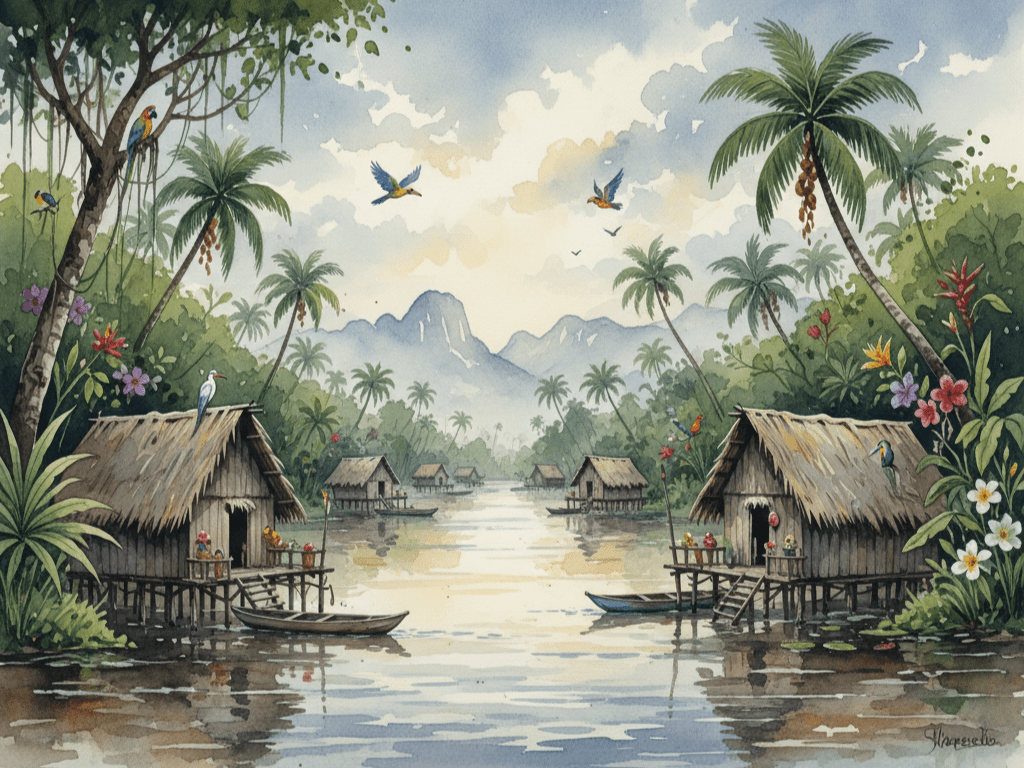
It enjoys a special geopolitical place, flanked by the Caribbean on one side and the great Atlantic on the other. Rain forests, cloud forests, Mountains like jutted fingers in the skies with flat table tops on their heads, extensive plains, and Caribbean coasts all indeed give rise to uniqueness and rarity
Orinoco , a mighty river, one of the largest in the world , runs through Venezuela.
The delta of Orinoco is remarkably untouched by modern times yet and people still live as they were hundreds of years back. The original inhabitants are the Carib, Arawak, and the Chibcha who enjoyed this land for thousands of years.
Spanish explorer Columbus came in 1498 and immediately fell in love with this land. Besought by Venezuela’s beauty, he thought that he was in the garden of Eden.Alonso de Ojeda, who came after Christopher Columbus, was so enamored by its beauty and the stilted houses raised by the native Indians on the lake Maracaibo that he called the place Venezuela the little Venice.
The world’s largest reserves of hydrocarbon fuel are in Venezuela. Venezuela is very rich in what is beneath! And, not all is well in Venezuela…
…After Christopher Columbus claimed Venezuela as Spanish territory in the 14th century, a failed effort was made in the 18th century to unify the Venezuela. The national hero Simon Bolivar attempted to unify Venezuela, Colombia, and Ecuador together, but the effort failed due to infighting.
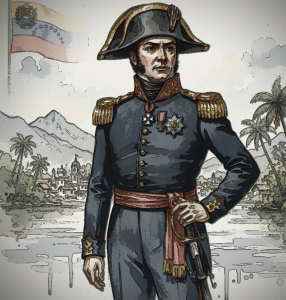
In 1830, under Jose Paez, Venezuela became a sovereign state. The world was changing fast, and the oil as an energy and fuel source came to the fore, and Venezuela started to export the oil. The measure failed to develop the overall economy as the privileged few only started to become spectacularly rich.
A series of despotic military rulers then ran through until Venezuela adopted Democracy in 1958.
The history of Venezuela shows that the independent aborigine clans never have been used to democracy or a central authoritative rule.
These clans were independent and were keeping to themselves.No ruling system seems to be working. Successive governments struggled to remove the social unrest without any substantial improvement in the life of the common man.
Hugo Chavez
In the 1990s, a number of army units staged a sudden and unexpected coup to seize the power, but other army units loyal to the government under Hugo Chavez crushed the mutiny.
The common people have found their hero.
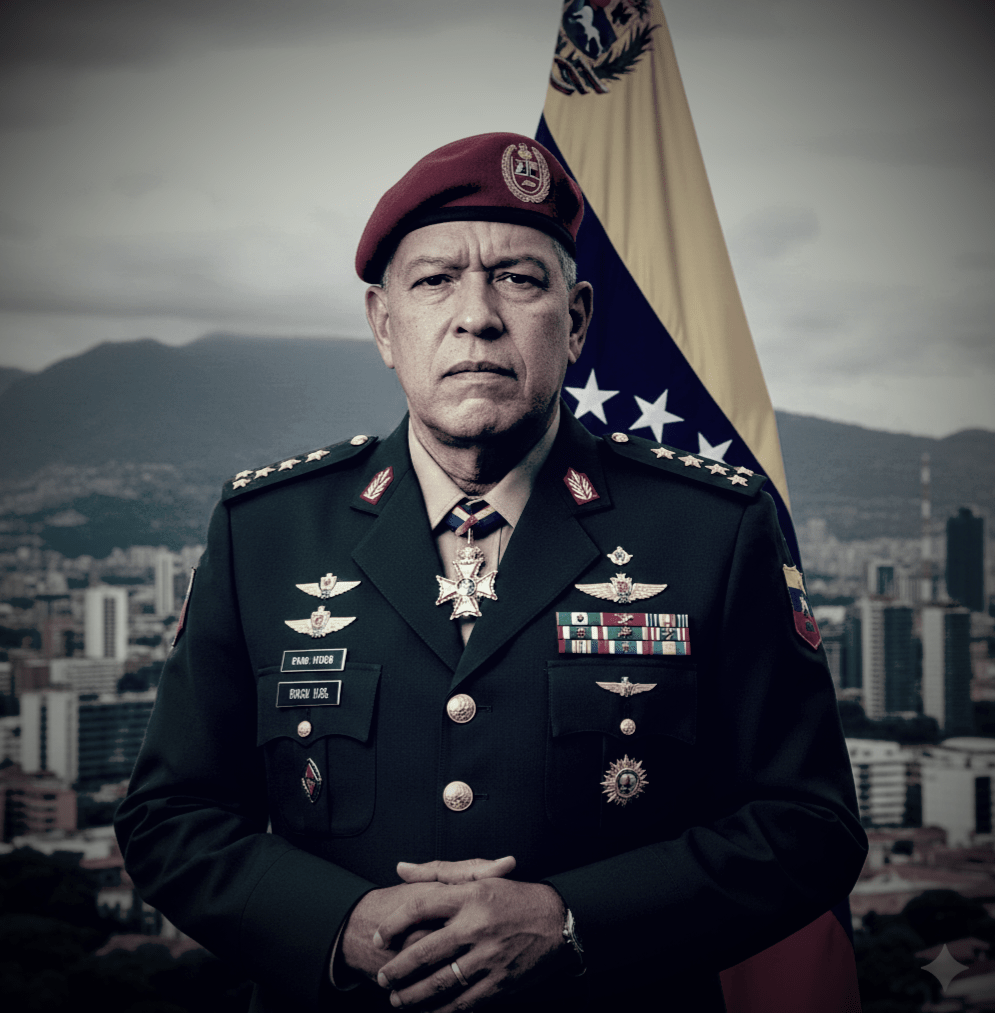
Colonel Chavez, with his finger on the pulse of the people, decided to fight the general elections and won the 1998 elections.
He rightly caught the emotions simmering in the heart of the masses and bought on Land reforms and Nationalization and tried to bring more benefits to his supporters, mainly consisting of working-class and poor.
Venezuela rose in the United Nations human development index score between the years 2000 and 2012.
This has tremendously increased the popularity of his government, but the ruling classes turned against him.
The Socialist government, though popular in the country, started to lose out at the international business level as it was becoming extremely difficult to operate businesses with the ruling government’s unfavorable attitude towards business and commerce.
Another factor that influenced Venezuela is the United States and its stakes in the Venezuelan oil. The US has granted special concessions in the oil imports. The pro-people and socialist government of Venezuela under Chavez took another step to increase its mass support and went after the concessions offered to the mighty US.
He ( Colonel Chavez ) rejected the US idea of the neoliberal agenda of the 1980s and 1990s.
And, when the foreign policy of the US changed after the terrible attacks on 9/11, it changed the equations globally.
The aggressiveness and the suspicion with which the US started to treat other nations was not easily digested by the Colonel Chavez government. This has resulted in increasingly disturbed relations with the US, and the US foreign policy against the Chavez government.
It added to the unrest in the society as the opposition, catching the US foreign policy, started to destabilize the government. Colonel Hugo Chavez died in 2013 and succeeded by Nicolas Maduro
Nicolas Maduro
Nicolas Maduro vowed to continue the policies of the previous government and tried to stem the rot that is setting in. The Maduro government becomes unilateral in its policymaking.
Oil was striking rich and was bringing a huge amount of money.
The Oil (mis) Management
The oil exported fetch money in dollars.The domestic industries providing life essentials were almost nonexistent due to slender margins of profits.
The essential commodities were offered to the masses at fixed affordable rates.
As the profit margin was lost, the local manufacturers and sellers slowly started to back out, and the production diminished.
The shortages started to feel acute, but it was not a very big problem.
The dollars are handy in such a situation, aren’t it? The Venezuelan government started to import these life-essential commodities from other countries, As, the payments in dollars, nobody was complaining.
Oil was striking gold, and all was well on every front.
Oil price crash & and its impact
The oil price crash in 2014 started to reach deep in the economy when the oil prices crashed in 2014.
And, the desperation started to build up. The rates of oil prices in the international market dropped further, compelling the government to pay more in dollars to purchase the essential products.
The domestic industry comes to a standstill. the foreign currency reserves with the government started to disappear rapidly, compelling to produce oil on a huge scale and at the cheaper rates.
The markets started to feel the shortages of essential commodities.
The shortages flared up the inflation and the Venezuelan economy was trapped in it’s lovingly and carefully made trap, with no apparent way out.
The solutions existed internationally and with the finance management pundits, of which the government seems to be oblivious.
The government started to act and mend its fences and printed more currency…
This has crashed the currency values further. The popularity of the government started to suffer a huge setback as the awareness started to sink in.The government, in its futile exercise to maintain fading popularity, increased minimum wages, increasing the strain on reserves.
The government tried to change the currency.
It has launched Petro, a new currency linked to the petrol reserves.
The government tried to change the currency. It has launched Petro, a new currency linked to the petrol reserves. But this new experiment didn’t brighten the blackened horizon.
Local trade and commerce, which existed on a very small scale indeed, ruined. Common people were used to government subsidies, and low rate essential commodities have to make a purchase by carrying currency notes in sacs. Because, due to inflation and additionally printed currency notes, the value of the currency was lost.
The inflation rose to 82766 %! The rate of essential commodities went out of reach. People started to leave their homes, towns, cities, states, and the country itself.
According to the United Nations, more than 2500000 people have already left Venezuela. Every 4 out of the 5 persons gone below the poverty line.
The rates of life essentials and other necessities doubled every 25 to 30 days. Long queues rowed outside the shops selling grains and food. A simple cup of coffee stood at 2.5 million bolivars. the transactions are increasingly done online now. Even at the hotels, the tip paid online. Waiters provided bank account numbers to hapless customers.
This has resulted in social imbalance.The neighboring countries, worried about the influx of refugees, brought armies to control the flow of refugees from Venezuela.
The citizen could not leave the country as they do not possess a passport. It’s not possible anymore to print passports as no paper and ink are left in the country, and there is no money to buy it from outside. The dollars earned are long gone, and the country started to borrow heavily from other countries.
The whole existence of the country is threatened.
Note: Maduro distanced Venezuela from the US that was reciprocated equally by the US. China became the new purchaser of Venezuelan oil on its own conditions, exploiting natural abundance. Russian mercenaries came ashore. Venezuela landed totally in anti US camp. Elections are held afterward in a compromised fashion favoring Maduro. He tried to reduce distance with the US but without any success! When Trump came back ruling US, in one sweep, he deprived China of cheap oil supply, brought back Venezuela to US camp, laid its stake further in the controlling world oil prices, and much more…!
News from many countries in Latin America, Africa, and the Middle East indicate people are deprived of their rights and personal liberty and are living in bad or substandard, lawless, and dire conditions. Uganda, Venezuela, North Korea, Libya , Somalia, and Iran and many are the examples of countries where people seem to be in an agitated,restless, and frustrated state. Corruption, terrorism, religious fanaticism, sectarian divisons, atrocities, lack of civil rights, and amenities and exploitation of natural resources have marked their despotic regimes. Developed countries at the forefront of international politics or the UN hardly act there purely in human interests. UN is more or less powerless, and other so-called apex countries neglect humans for their gains!
 the-curators.org
Leave a comment