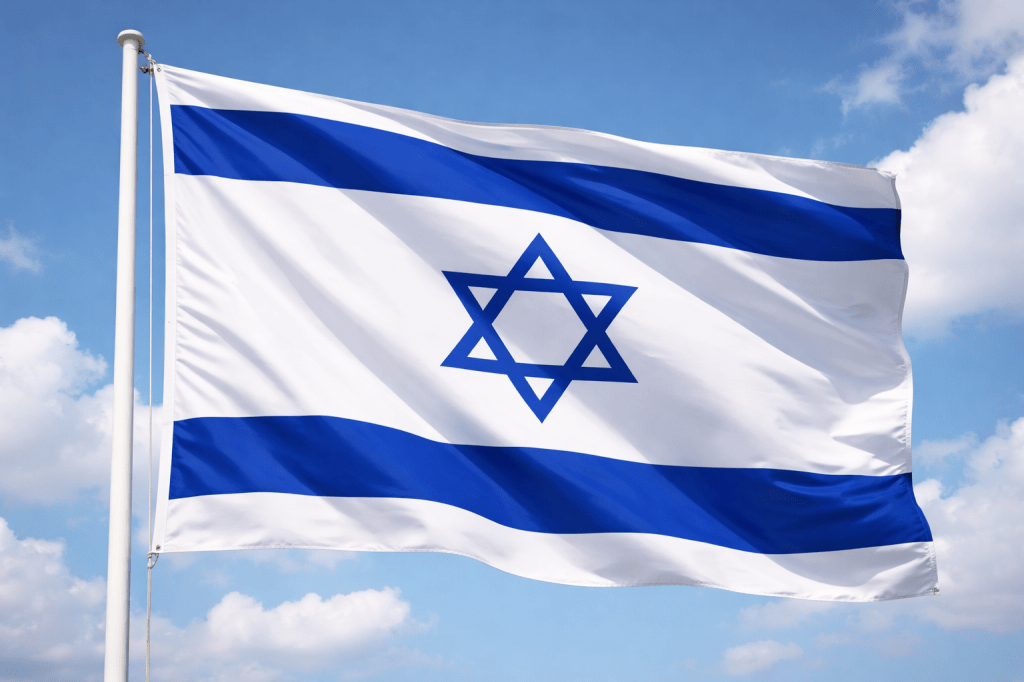
Israel is a Jewish homeland. Jewish history is rich and marked by many upheaval and persecution. Why does the need to create a separate nation for a community rises tell us the hardships and helpless immigration of Jewish people. It has thousands of years of struggle and clashes with surrounding nations , faiths, sects, and religions. Even when all surrounding Muslim nations were and are unanimous in its annihilation, it stood firm and carved out a place of its own. How much humanity suffered in these clashes, and how much blood spilled or what consequences of its aggressive posture and alliances with other powers will result in to is a serious question to all. But what are the factors that contributed to Israel’s aggressive geopolitics….
1. Historical Trauma and Existential Mindset
Israel’s strategic culture is deeply shaped by two experiences:
The Holocaust (1930s–40s) – The destruction of European Jewry created a powerful belief that Jews can not rely on others for protection.
Repeated wars since 1948 – Israel fought multiple wars with neighboring states (1948, 1967, 1973) and faced constant militant attacks produced a core belief inside Israeli policy circles:
“If Israel loses a war, it may cease to exist.”
Because of this perception, Israeli leaders often prioritize survival and deterrence over international approval.
2. The Doctrine of Deterrence
Israel is a small country surrounded by historically hostile actors, with limited strategic depth (in some areas only 15–20 km wide).
Therefore, its military doctrine emphasizes
overwhelming retaliation and
Rapid and decisive force
Punishing enemies so severely that future attacks become too costly
This approach is sometimes called “deterrence through disproportionate response.”
Examples:
Lebanon wars against Hezbollah
Gaza operations against Hamas
From Israel’s perspective, showing restraint can encourage future attacks.
3. Unlike traditional wars between states, Israel often fights
Hamas (Gaza)
Hezbollah (Lebanon)
Islamic Jihad
Various militant groups backed by Iran
These groups
Operate in dense civilian areas
Use asymmetric warfare (rockets, tunnels, guerrilla tactics)
Israel argues that this makes civilian casualties hard to avoid, while critics say Israel still uses excessive force.
4. Domestic Political Pressures have a strong expectation that the government must protect citizens at any cost.
After attacks (for example, October 7, 2023, Hamas attack):
Public anger becomes extremely high, and leaders face pressure to respond forcefully.
If a government appears weak on security, it can quickly lose public support.
So political survival pushes leaders toward military escalation rather than restraint.
5. Confidence in Strategic Backing (Especially the U.S.)
Israel has historically relied on strong support from the United States’ military aid and diplomatic backing in the UN Security Council.
Because of this support, Israel may concluding that the
International criticism will not translate into decisive punishment.So, the strategic cost of ignoring global opinion is manageable.
6. Intelligence and Military Superiority of
Israel is known and proven. It has one of the most advanced militaries and intelligence systems in the world.
Capabilities include advanced air power
Missile defense (Iron Dome)
Cyber warfare
Intelligence networks
This superiority gives Israeli leaders confidence that military force can achieve political goals.
7. Long-Term Strategic Goal: Preventing Regional Threats
Israel sees certain actors as existential threats, particularly:
Iran
Iranian-backed militias (Hezbollah, Hamas, Houthis)
Because of this, Israel sometimes acts preemptively or aggressively to stop these threats from growing.
Examples:
Airstrikes in Syria against Iranian positions
Operations targeting Hezbollah leadership
8. Perception Gap with International Opinion
Many countries view conflicts mainly through:
Humanitarian law
Civilian protection
Israel often frames them as survival wars against groups that seek its destruction.
So both sides operate with different moral frameworks.
9. Regional Political Reality
Middle Eastern politics has historically been power-centric.
Israel believes that showing weakness can invite attacks from multiple actors simultaneously.
In Simple Terms
Israel’s determination comes from a combination of:
Historical fear of annihilation,
need for strong deterrence,
domestic political pressure,
military superiority,
strategic backing from allies and
Hostile regional environment.
So leaders often conclude:
Security survival > international criticism
 the-curators.org
Leave a comment