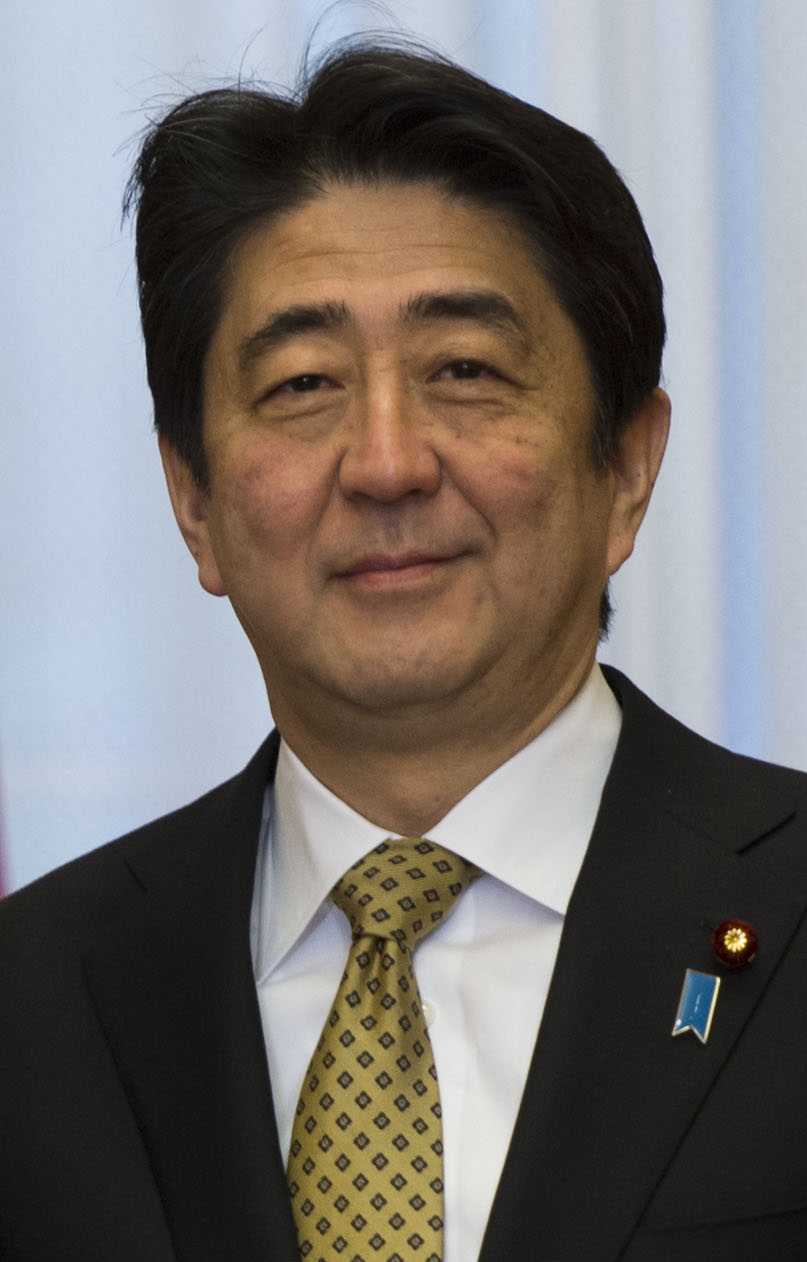
He guided Japan in a turbulent period than one can assess. His tenure was marked by his footprints all over the globe. In the truest sense, he was a globe-trotting Prime Minister of Japan. The challenges thrown by rising superpower, China, Russia, and North Korea were growing day by day. There were blow hot blow cold relations with neighbors and rumors that Japan is investing in military might.
There was a change in leadership of Japan’s closest ally to the US, and a new unpredictable volatile president was taking reins. Add economic stagnancy to it to complete the picture. In such circumstances, he steered Japan admirably.
A globe trotting, true diplomat!
His period as a Prime Minister was marked by his visits to state heads of Asian, Middle East, Latin American, Australian, European and African head of states, and on many occasion, these visits were the first by any Japanese PM ever. Yes, Shinzo Abe’s diplomacy and international relations helped Japan immensely to survive murky international waters.
Perhaps he was the first international leader to express a free and open Indo-Pacific region and Ocean and Trans – Pacific region and its geo-political and economic importance. And, to gain international acceptance to Indo-Pacific and Trans -Pacific region’s importance proved to be a very effective tool to garner world opinion on China.
It also helped as leverage to tackle the Chinese maritime assertions against Japan. This is the true legacy left by Shinzo Abe. It’s unfortunate that such a stalwart of diplomacy and vision was assassinated. The guidance and further direction that he could have given to the country at the experienced age of 67 was aborted suddenly.
His Times
China’s rise to superpower status strangely coincides with Shinzo Abe’s second innings as a visionary leader of Japan. Perhaps his role was destined to tackle China diplomatically. Abe legacy also consists of revival of memories of Japan’s war dead during the Second World War. His visit to Yasakuni shrine in Tokyo honors Japan’s war dead, including some convicted war criminals infuriated China and S. Korea.
His inclination towards right-wing politics was an uneasy and awkward chapter to many. But the China’s ascension as a new superpower and neighbor Japans’ loyalty to America worsened the relations, and he has to tilt towards rightist thinking. The Chinese president openly attacked Abe and Japan. Chinese claims over Senkakus island or Diaoyu in Chinese language and the Chinese propaganda against Okinawa (where a major US military base was in operation) are few of the examples of a strained relationship between the two countries.
China has just surpassed Japan economy that time. And, in all terms of military might, scientific progress, population and digital progress, was way ahead of Japan. It is to Abe’s credit that Japan has not become a Chinese satrap by playing a second fiddle or tangled relations with new, unpredictable American president. The American pullout from the Trans- Pacific partnership was a major jolt for Japan. But Abe didn’t let it affect the relations with the US and used a competing China to effect solid relationships with the US.
Abenomics
On the domestic front, his famous “Abenomics” garnered mixed reactions. Abe tried to revive the faltering Japanese economy .‘It’s aim was to make Japan more competitive in the global market by increasing the money supply, undertaking government spending to stimulate the economy, and undertaking economic and regulatory reforms to make Japan powerful).
Though his critics say it has not achieved its desired results, it should be noted that it rejuvenated the economic and business front. ‘TIME’ mentions in its Economy section that many economists say it helped revive the Japanese economy. Japan was suffering when Abe took office in 2012 from weak exports, a trade spat with China, and continued fallout from the 2011 nuclear disaster and tsunami leading to recession.
The results it produced were positive but inconsistent. But it eased the rules for migrant workers, brought more women into the workforce, and increased protection for temporary workers. Time further add quote Mireya Solis, director of the Center for East Asia Policy Studies at the Brookings Institution as “He tried to revive the Japanese economy, and there some successes there”.Abe’s former economic adviser, Hamada, says the approach was very successful in creating jobs and promoting equality between regular and temporary workers.
Abe remained in constant focus for his alleged cronyism, revival of nationalism and plans to reform the Japanese constitution and a possible militarization. His tenure has pulled out Japan from a looming Chinese, North Korean threat and in a visionary way formed several international alliances that can constantly aid economic progress.
He stabilized relations with Beijing and opened doors for Chinese tourists to Japan. He held a landmark meeting with Xi Jin Ping in 2014 trying to melt nearly frozen relations with China and started talks on maritime security and perseverance of international boundaries.It was not surprising that Japan has accorded a rare state level funeral, a second only in the post war Japan.
The Architect of ‘QUAD’
He was really the sole architect of the 4- Nations powerful alliance in the Indo Pacific oceans – the QUAD.
His speech initiating the process of QUAD formation is given below, which testifies his vision. This speech was delivered at Indian Parliament in his tour to India in 2007.
He elegantly muted the proposal in his famous speech of ‘Confluence of two Seas’ at the Indian Parliament. It was August 22, 2007. The Japanese prime minister said,
“The Pacific and the Indian Oceans are now bringing about a dynamic coupling as Seas of freedom and prosperity. ‘A broad Asia’ that broke away from geographical boundaries is now beginning to take on a distinct form”.
“Our 2 countries have the ability- & the responsibility- to ensure that it broadens yet further and to nurture and enrich these Seas to become Seas of clearest transparence”.
“By Japan and India coming together in this way, this ‘broader Asia’ will evolve into an immense network spanning the entirety of the Pacific Ocean, incorporating the US and Australia. Open and transparent, this network will allow people, goods, capital, and knowledge to flow freely”.
“In addition, as maritime states, both India and Japan have vital interests in the security of Sea lanes, it goes without saying that the Sea lanes to which I refer are the shipping routes that are the most critical for the world economy”.
A joint statement issued afterward clearly reflects on the inclusion of other like-minded countries. The joint statement read like follows:
The two leaders welcomed the participation of the Japanese maritime self-defense force in the multilateral maritime exercise “Malabar” to be held in September 2007 in the Bay of Bengal.
The two leaders shared the view on the usefulness of having dialogue among Japan, India, and other like-minded countries in the Asia-Pacific region on themes of mutual interest.
The QUAD alliance infuriated China but succeeded in diverting attention over Japan. It was a great diplomatic move initiated and well executed. That is why Indian PM Modi, while paying his respects to Abe, said that Abe was a towering global statesman, an outstanding leader, and a remarkable administrator. His sharp insights on the economy and global affairs always made a deep impression on him
The Enduring Legacy and Right Tribute
 the-curators.org
2 responses to “Archives 6 – Shinzo Abe”
आंतरराष्ट्रीय घडामोडी, नेतृत्व आणि दूरगामी परिणाम यावर आपला चांगलाच अभ्यास दिसून येतो. शिंजो आबे व्यक्तित्व आणि नेतृत्व समजून येते.
LikeLiked by 1 person
आंतरराष्ट्रीय घडामोडी, नेतृत्व यावर आपला अभ्यास चांगलाच आहे. शिंजो आबे यांचे नेतृत्व आणि आंतरराष्ट्रीय राजकारणावर पडलेला त्यांचा प्रभाव चांगल्या पद्धतीने आपण मांडला आहे. जपानचा द्रष्टा नेता म्हणून त्यांचा कायम नामोल्लेख केला जाईल
LikeLike